


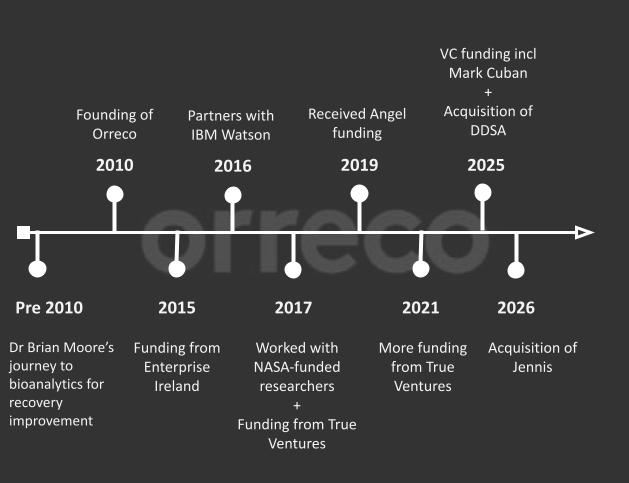
Orreco, a global performance science company built on AI, biomarkers, and biomechanics, has recently experienced significant growth (between Dec 2025 – Jan 2026). Shortly after raising $4m from investors (including Mark Cuban), they acquired DDSA (Data-Driven Sports Analytics), a data analytics company focused on helping tennis players improve their game. This was followed by the acquisition of Jennis, a women’s health and fitness app focused on hormonal health and helping women navigate training and menstrual cycles. It is evident that the team is doubling down on their mission – to provide elite athletes with actionable data. So what kind of data are we talking about, and how would it help athletes with optimising their performance, recovery, or even extend their athletic longevity? We will attempt to break it down here.
A bit of history
Orreco was founded in 2010 in Galway, Ireland, by sports scientist Dr Brian Moore and consultant haematologist Dr Andrew Hodgson, they started off by providing analysis of blood-borne biomarkers to monitor athlete health. From blood samples of athletes, they run 40 general tests and on top of that, specific examinations depending on the sport. Analysing the test results and related data basically tells them what is happening to the athlete (e.g. identifying iron deficiencies), how they are responding to training, and shed light on why they might be underperforming. This is then used to guide the coach and athlete to take the adequate actions to improve performance and reduce injury risk.
But even before starting Orreco, Brian went through an interesting journey of chasing after a Kenyan runner while doing his studies in PE, diving into haemotology of athletes to understand the inner workings of athletic performance, having a stint at the Australian Institute of Sport, doing his PhD focused on biomarkers, and working with British olympic athletes through 3 olympics (Sydney – 2000, Athens – 2004 and Beijing – 2008). Establishing Orreco following all that seems like the logical next step. The name Orreco is a combination of ‘Or’ (Gaelic for gold) and ‘Recovery’, alluding to the point that recovery is the key to achieving the gold medal. [You can read more about the history in this article – link]
From that starting point (blood testing), more data was added to the mix to provide additional context. Things like GPS data, nutrition, training load, sleep and travel schedule. The team went to NUI Galway to build the data mining and analytics platform. And that analytics platform continues to grow as the team partnered with IBM Watson and NASA-funded researchers at the University of Houston, while funding multiple PhD studies around the world and building up their knowledge base, ensuring their work is evidence-based.
What the tech stack looks like today
Orreco (which almost sounds like oracle) is essentially a massive platform that gathers different sources of data, processes them individually and collectively (depending on relevance), then presents those analyses to the users so that informed decisions can be made collectively. Here are what the different modules consist of:
Advanced Biomarker Analysis
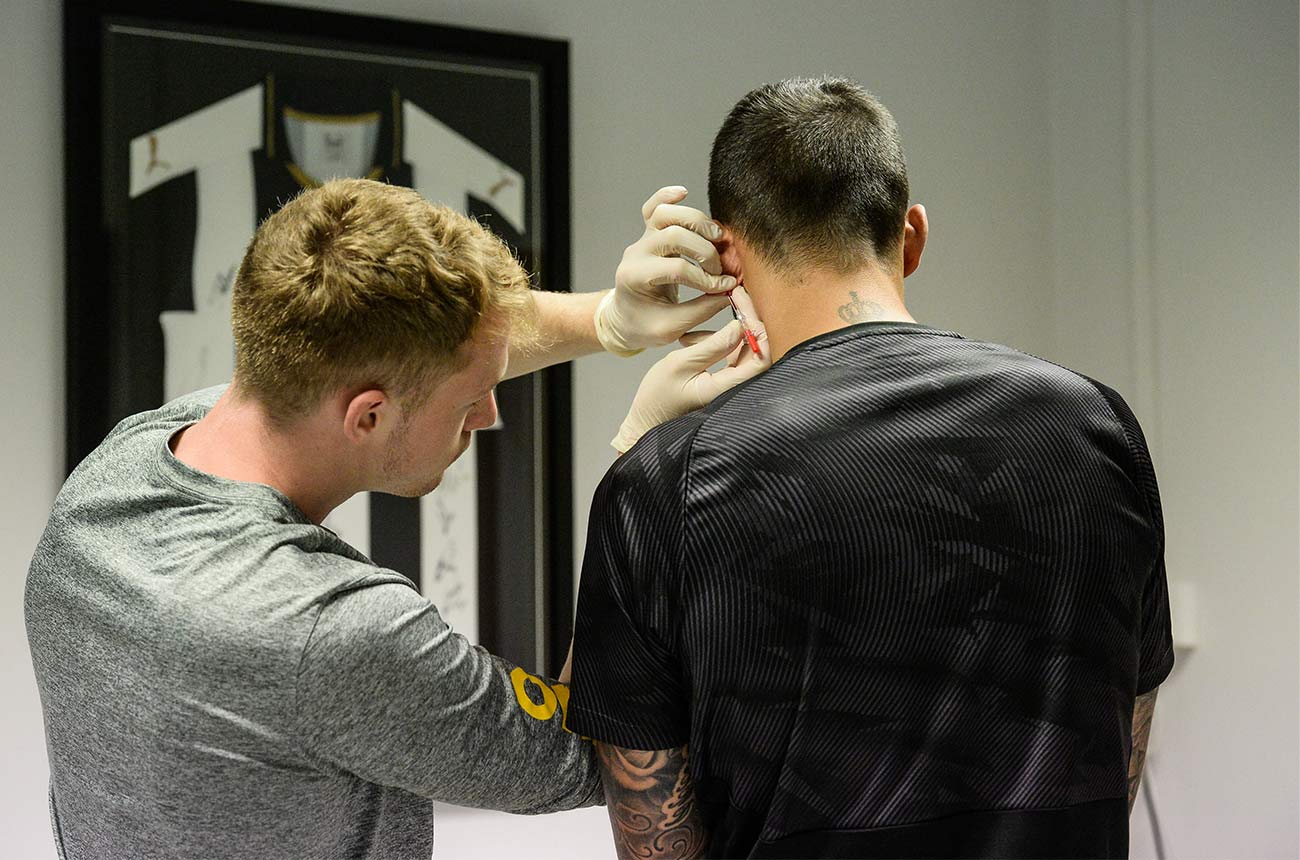
Orreco’s OG solution/module that launched them. The Blood Biomarkers module now analyses over 50 blood biomarkers to assess recovery, readiness, and nutritional status. Orreco uses both comprehensive venous blood draws (covering haematology, biochemistry, immunology, and endocrinology) and point-of-care tests for rapid results, typically within 5 minutes. Instead of relying on static population averages, longitudinal data is used to create “individualised adaptive reference ranges” (IARR) for each athlete, offering a more precise, personalised assessment. Focus areas include inflammation and recovery, oxidative stress, nutritional status and immune system function.
Recovery Lab

The Recovery Lab module is a centralised decision-support system for managing athlete recovery and a performance intelligence platform. It integrates biomarkers, GPS data (distance, accelerations, decelerations, etc.), neuromuscular test data (e.g. from VALD Performance tech), wellness (self-reported data using the @thlete app), sleep and autonomic nervous system (ANS) data (from wearables like Oura Ring or WHOOP). It consolidates multi-modal recovery and performance data in one platform, enabling cross-comparison of internal/external load and recovery trends, and delivers individualised recovery recommendations.
Motion Signal
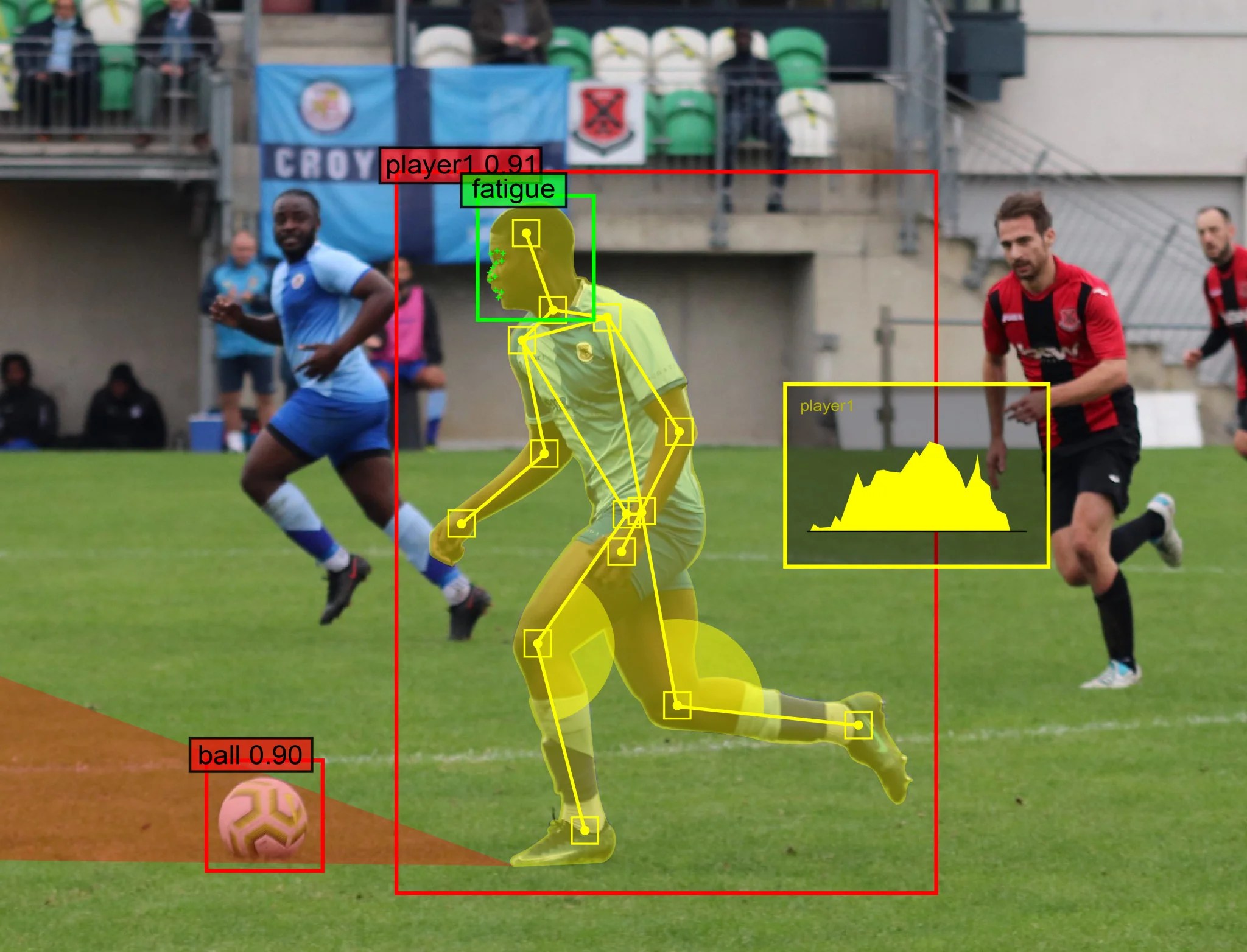
The Motion Signal module is a computer vision and machine learning-based movement analysis tool that generates an injury risk score based on movement patterns captured through tracking technologies. Although not explicitly mentioned, it would likely rely on existing broadcast footage or accessing specialised in-venue camera installations (e.g. STATS). The key benefits include the ability to detect deviations from an athlete’s normal movement behaviour and to support return-to-play (RTP) progression. With minute-to-minute post-game injury risk scoring, it highlights overload and red/amber status immediately after each game. It can also be used to tailor conditioning and drill design based on real movement data.
Medical Notes
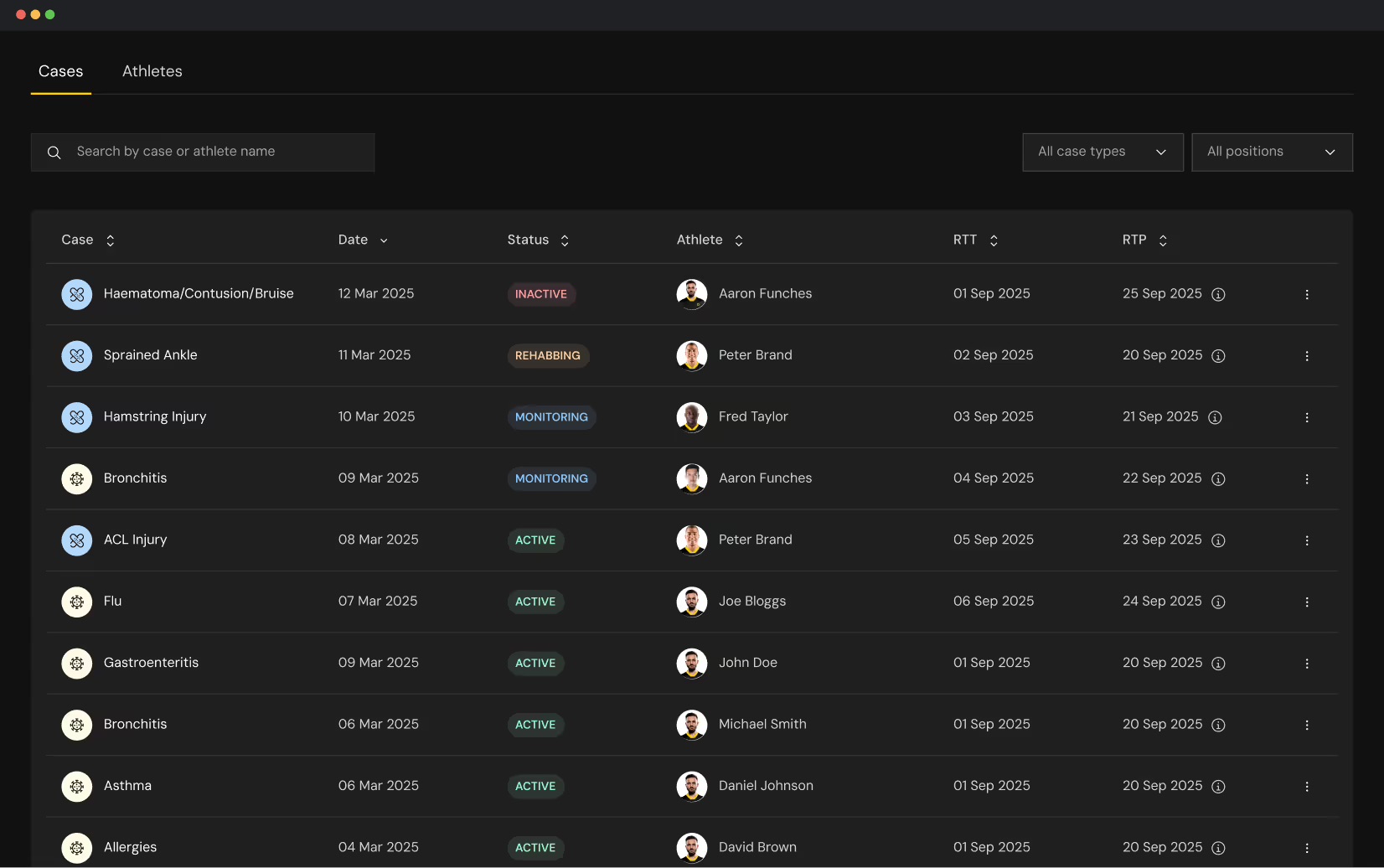
This is essentially a centralised medical record and case management tool built into the overall platform. It is a dedicated space for recording injuries, illnesses and medical interventions. Practitioners can attach files, medical notes (e.g. in HEAP or SOAP format), photos, videos and voice notes linked to cases. Together with the integrated athlete performance data, it allows staff to view medical history alongside physical load metrics data. The system is designed to be searchable and audit-ready, ensuring that professional teams meet medical record-keeping standards. More importantly, it enables coaches, medical practitioners, sports scientists, and trainers to share insights and make data-driven decisions regarding player availability, and to easily update athletes’ overall status between ‘Not training’, ‘Rehab’, ‘Monitor’, or ‘Full training’.
Analytics and Reporting
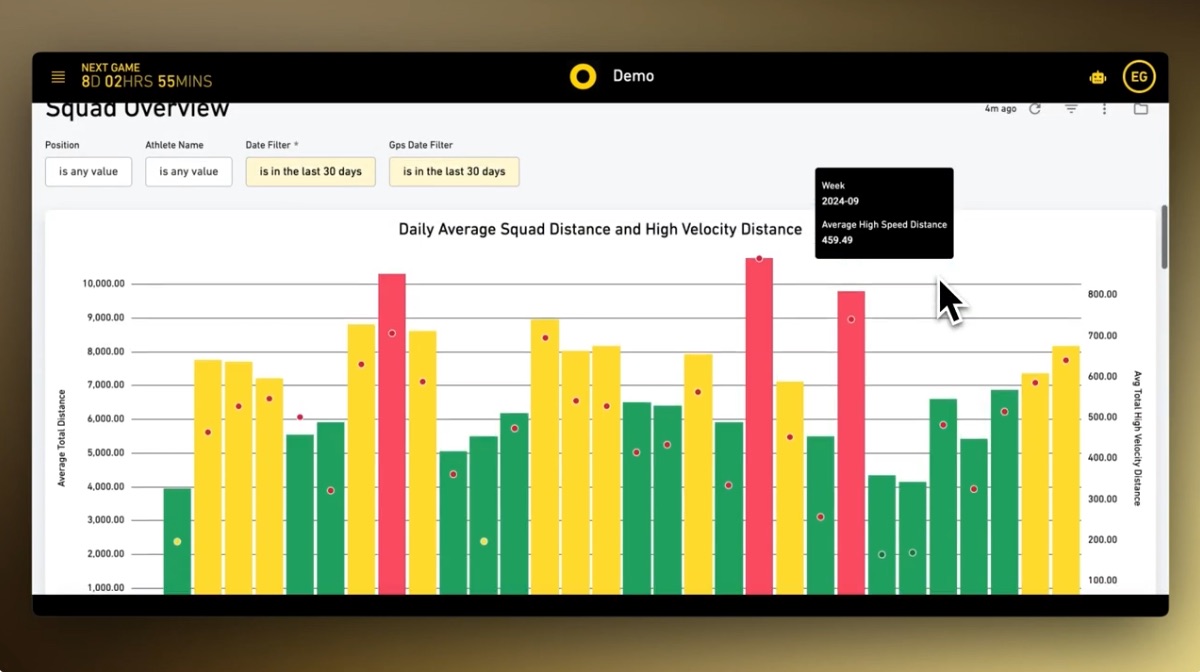
Also called B.A.R.I (pronounced ‘ Barry’), which stands for Benchmarking, Analysis, Reporting and Inference. It’s a dynamic dashboard designed to analyse athlete data, offering live, interactive, and automatically updated visualisations as new data comes in. The key features include:
- Cross-variable interrogation: allowing for in-depth analysis of different data streams (all that have been mentioned earlier).
- Threshold alerting: which notifies practitioners when data indicates potential risks, like injury risks
- Customisation: staff can customise dashboards according to what they want to see and generate custom reports of the data they need
- Automation: enables automatic scheduling of reports (e.g. sending out daily, weekly or post-game reports as required). It also includes built-in alerts that send up-to-date performance or medical insights to relevant team members.
Female Athlete Program
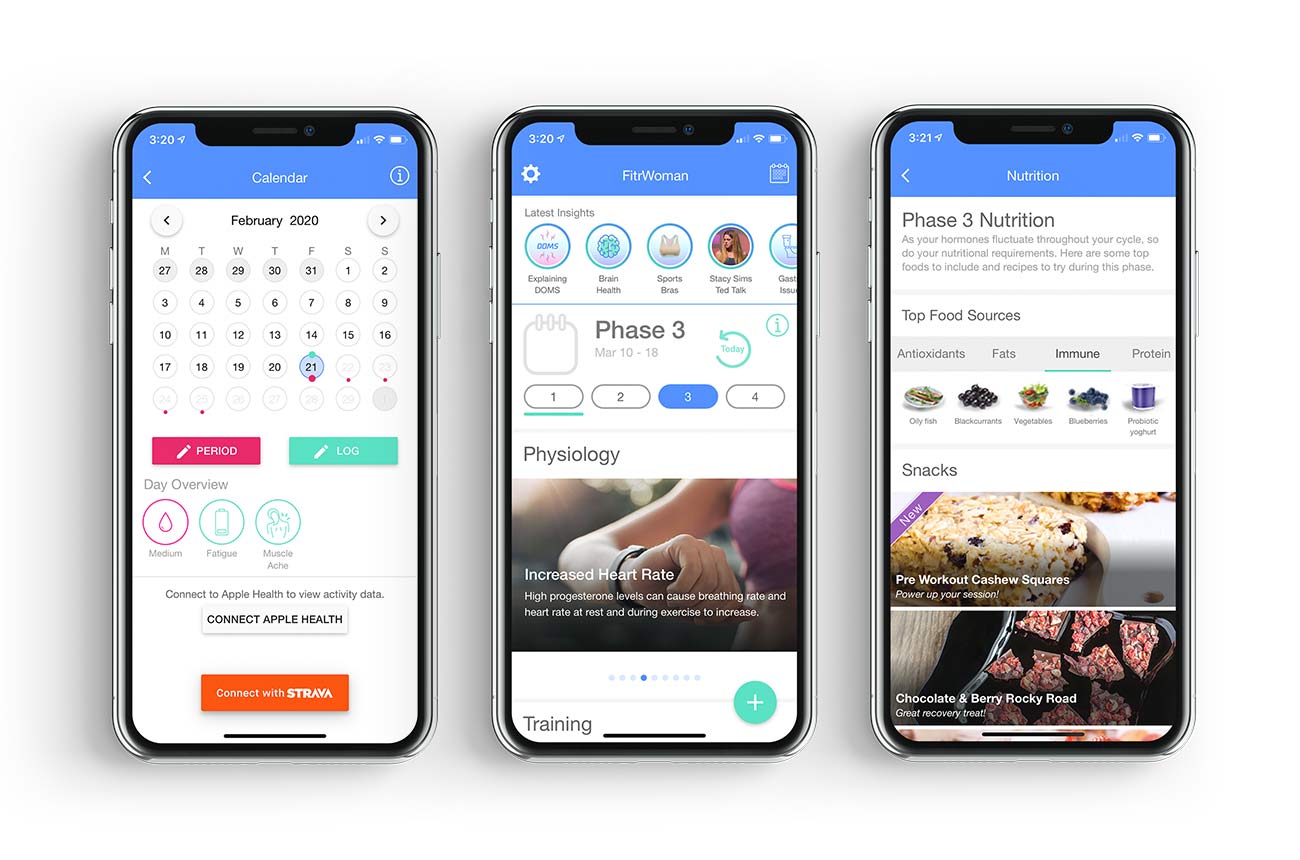
Back in 2017, the Orreco team saw a gap in half the athlete population and developed the FitrWoman app with Dr Georgie Bruinvels, a leading exercise scientist in female athlete physiology. The goal of FitrWoman was and is to provide personalised training and nutrition recommendations based on their menstrual cycle. The app allows athletes to track their periods and symptoms (flow, energy, mood) via an interactive calendar to identify trends. It offers recommendations on exercise intensity and types based on the athlete’s stage in their cycle. It also provides nutritional advice, recipes and tips for managing symptoms and supporting recovery. Plus, there’s a library of content to help athletes understand how hormones affect physiology. Besides the FitrWoman app, there is an accompanying coach platform called FitrCoach, which allows coaches to connect with their athletes and manage training programs based on data.
Operating platforms

Similar to the FitrWoman and FitrCoach concept, teams and athletes can access all the dashboards and features mentioned above through two operating platforms. There is the @thlete app, where athletes can view their own metrics, trends and analysis, and choose what data to share, allowing different supporting staff to access and monitor their progress and recovery. It’s also the platform they use to provide their input, either through their wearables or questionnaires, to capture data like wellness or RPE (rating of perceived exertion). Then there is the Te@m app. This is the platform for the coaching team, sports scientists and medical staff to monitor, analyse, and manage the health, performance, and recovery of their athletes. In other words, all the modules mentioned above can be accessed via the Te@m app.
In case you were wondering, Orreco’s high-performance platform includes AI tools. Here’s what those tools do: there’s AI Charting, which lets users interact directly with their data via intuitive voice commands. AI Action Models provide comprehensive overviews of any dataset with simple voice commands. There’s the TRAIN module, which predicts training loads based on historical GPS data and creates sessions tailored to specific criteria. Last but not least, AI Injury Risk Modelling (Motion Signal) delivers post-game injury risk scores by identifying deviations from normal movement patterns.
What DDSA brings to the table
A quick recap: DDSA was founded by Shane Liyanage in 2017/2018 in Melbourne, Australia. We got to speak to Shane back in 2021, and he was already establishing himself (and DDSA) as a force to reckon with in the tennis analytics world. By 2023, Shane and his team were already supporting Ons Jabeur (who rose to world no. 2), Aryna Sabalenka (who rose to world no.1), Emil Ruusuvuori, and Taro Daniel. Fast forward to 2025/2026, and they are now part of Orreco as Orreco Tennis. For the full story of the acquisition, check out this podcast from Diary of a Professional Tennis Coach. So, what is DDSA or Orreco Tennis adding to the parent company?
PlayerDex App + Live
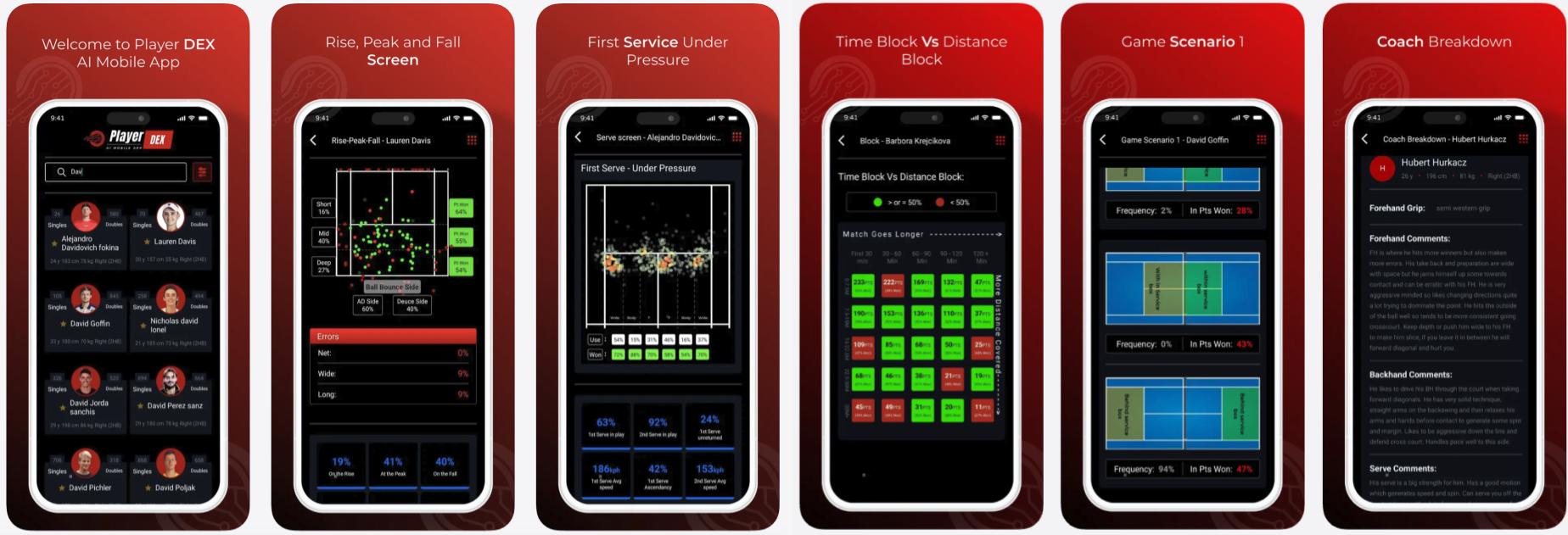
Available as a mobile app and web app, PlayerDex is a tennis analytics software designed for coaches, analysts, and players. Utilising data from various sources (including smart courts, computer vision apps and their inhouse developed solution), it analyses them and provides detailed metrics for ATP and WTA players to visualise and analyse serves, returns, serve +1, physical, and tactical patterns. It can be integrated with video so users can watch match videos filtering by wins, losses and specific points like faults or winners. It is a comprehensive tool that provides valuable insights into players’ performance across different aspects of the game, enhancing the user’s understanding of their strengths and weaknesses; plus, it offers customised insights to help players map their long-term game development. In addition, users can analyse opponents’ tendencies, pressure patterns, and stylistic mismatches to inform pre-match planning. PlayerDex Live was later developed to provide live tablet-based match insights including real-time tactical signals. It is powered by Computer-Vision tracking or live Electronic Line Calling (ELC) feeds.
DDSA TRAX + Echelon AI
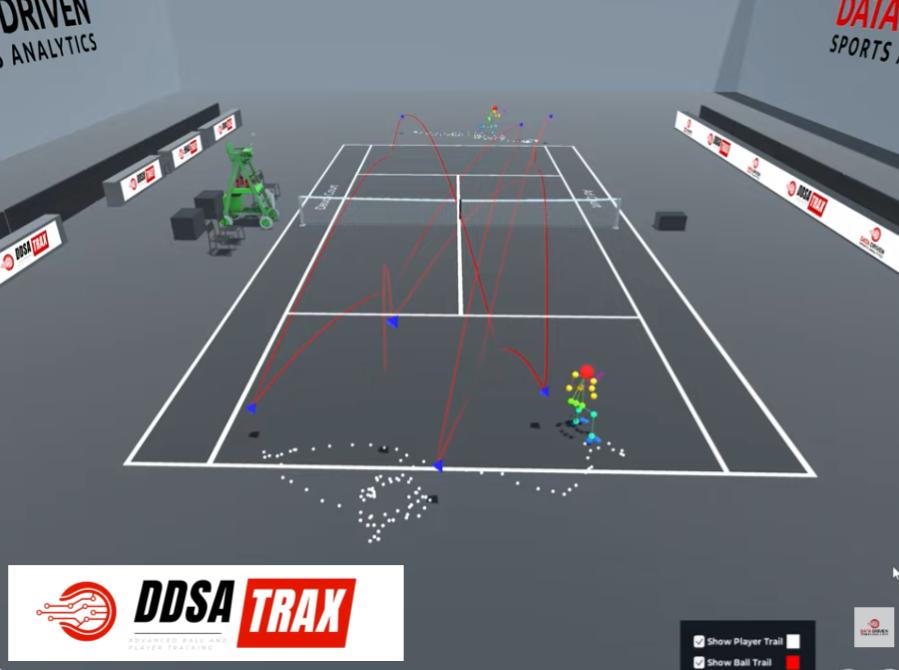
To provide advanced AI-powered, computer-vision-based performance analysis, DDSA developed TRAX, a 3D visualisation platform built on ELC data. It can be augmented with DDSA AI-tracked player and ball data. It can also integrate markerless CV data, sensor data and skeletal tracking data, and enables biomechanical overlays and spatial analysis. The team subsequently developed DDSA Echelon AI. It is DDSA’s in-house CV player and ball tracking. It has AI-based dead-time removal, which automatically detects and filters out irrelevant footage. No wearable sensors are required for motion and skeletal tracking; simply record with a smartphone. Biomechanical analysis can be performed using skeletal data, which provides in-depth metrics on serve mechanics (speed, spin, trajectory) and footwork.
DDSA AI Agent (Prototype)
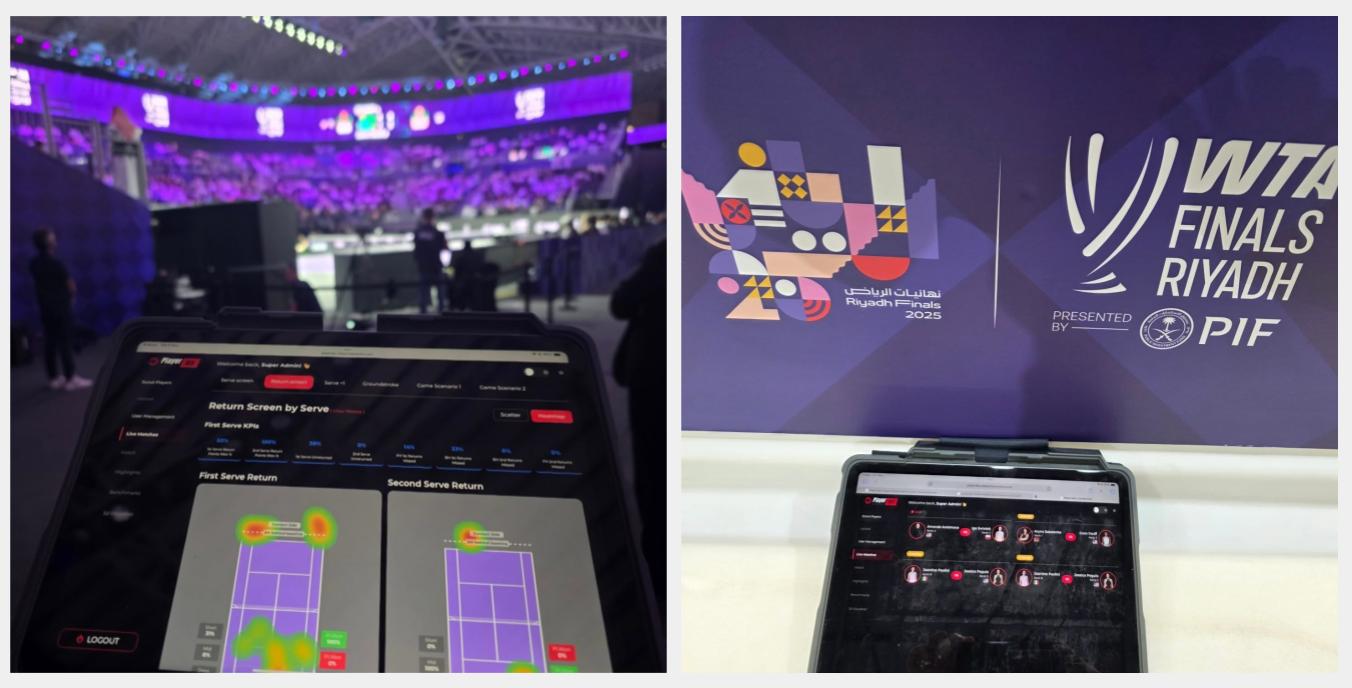
DDSA AI Agent is an AI assistant trained on DDSA datasets and tennis literature. It provides natural language prompt-based insights and context-aware tactical and technical recommendations. It is currently in the prototype stage, but might be available in the near future.
What about Jennis
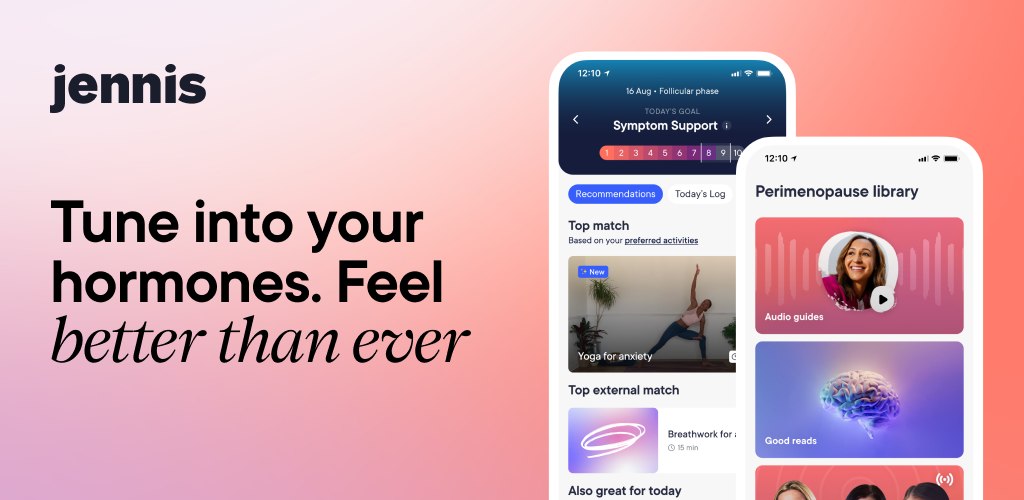
Founded by Dame Jessica Ennis-Hill and her agent/manager Jane Cowmeadow in 2019, Jennis is a women’s health and performance platform that helps map training to the menstrual cycle. Starting out as a fitness app, it focused on workouts for pregnancy and the postpartum period. Then, later in 2021, Jennis developed a new product called CycleMapping, which helps women align their training, nutrition, and well-being choices with the four phases of their hormonal cycles (menstrual, follicular, ovulatory, and luteal phases). This was developed in collaboration with physiologist Dr Emma Ross, who was formerly the head of physiology at the English Institute of Sport (EIS) and has decades of experience in this area. The goal is to optimise energy levels, reduce PMT (premenstrual tension), and boost fitness gains.
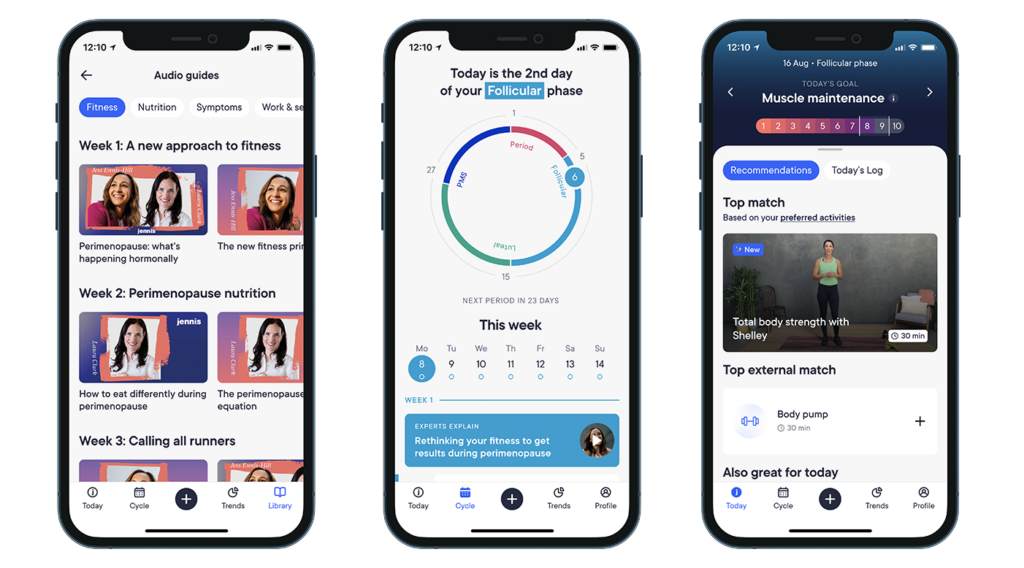
They then developed and released a new feature/product, ‘Perimenopause‘, in 2023 to support women as they head into perimenopause. Similar to CycleMapping, it provides personalised exercise/training, nutrition, and lifestyle guidance tailored to users’ specific symptoms and changing physiology resulting from hormonal fluctuations. The personalised training emphasises strength training, with workouts ranging from 5-35 minutes designed to accommodate fluctuating energy levels. At the same time, it provides mental well-being tools that guide users through breathwork and mindfulness sessions. Add to that, there’s education and nutrition support in the form of nutritional advice and audio guides from clinical experts. All these fit into the primary goal of keeping women healthy, reducing perimenopausal symptoms (such as mood changes, hot flashes and disrupted sleep), and simply feeling in control of their health.
How it all fits in
The female athlete’s ‘one-stop shop’
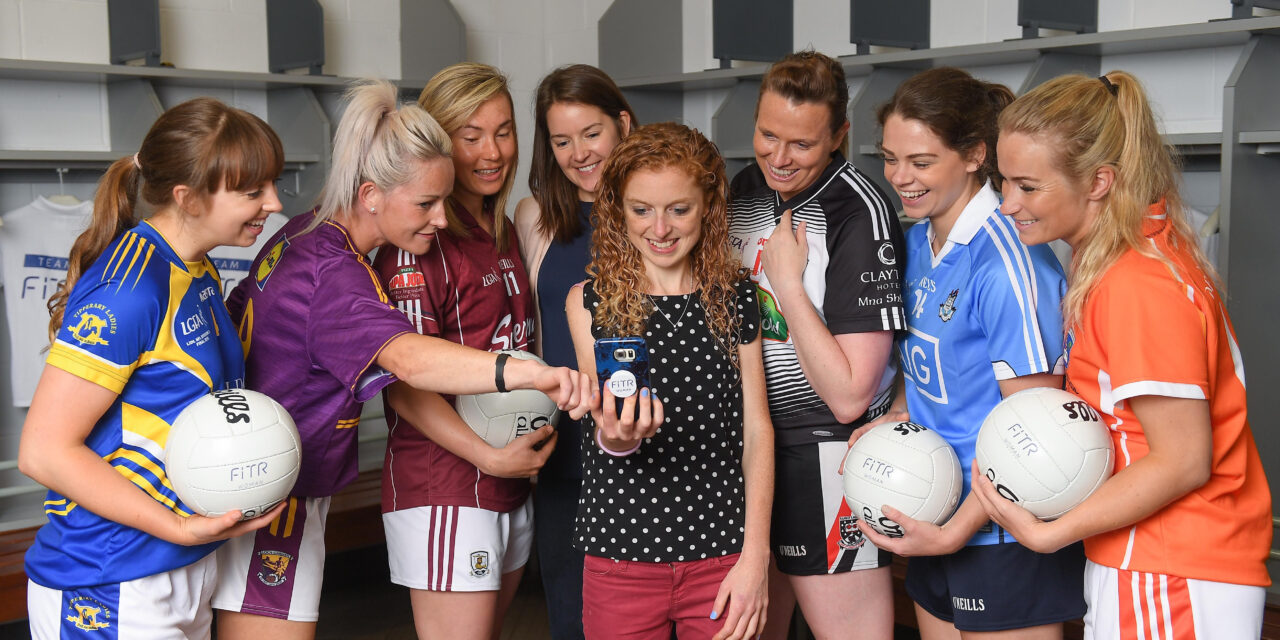
Essentially, the acquisition/merger of Jennis means the amalgamation of female athlete support tools. Orreco has already developed the FitrWoman and accompanying FitrCoach App. Instead of competing with the Jennis app, it makes sense to join forces. They basically share the same vision and goal, and Jennis has taken it further with their Perimenopause feature, building a huge library of content. Combining simply means users from both sides will have better support going forward, with potential AI integration and options to integrate more health metrics, spanning an athlete’s pre-elite, professional/elite, and post-professional years.
Cementing their authority in Tennis

Prior to this merger, Orreco probably worked with some tennis players/coaches, but this is not well documented. Their biomarker analysis would have been beneficial for understanding the players’ internal well-being and helpful for preventing or managing injuries/recovery. But DDSA’s suite of tennis-specific tools was what was missing for Orreco – Firstly, analytics that break down a tennis player’s performance and game plan, and provide insights for better strategy against various opponents. Then there are visualisation tools that help players and coaches see and communicate more effectively. Lastly, biomechanics data from DDSA’s CV tracking gives insight into players’ serves and shots. Now, combine all that with Orreco’s physiology ‘package’, plus women-specific tracking and evidence-based support, and this truly transforms Orreco Tennis, enabling them to deliver end-to-end performance intelligence.
Final word
No doubt that this is an exciting time of growth for Orreco, DDSA (now Orreco Tennis), FitrWoman and Jennis. It will be interesting to see what unfolds through these mergers and how the platforms will evolve from the users’ perspectives. Even as I put this article together, I was told that DDSA TRAX has been adapted to now provide Skeletal tracking and analysis for NBA teams that Orreco supports. Furthermore, the team is working on producing a soccer solution for those teams in EPL, MLS and other leagues who work with Orreco. Who knows what transformations will happen in the next six to twelve months? More gold, better recoveries, better supported athletes? I think that’s a safe bet.
With that, thanks for reading and do leave a comment or message us if you would like to share a thought or feedback.
 Sports Technology Blog