

From Sawe and Kejelcha breaking the once ‘impossible’ two-hour barrier to every recent podium finisher at the Abbott Major Marathons, one common denominator stands out, they were all wearing carbon-plated super shoes. Their adoption by the best runners in the world is more than just an aggressive marketing strategy by the big brands to generate more revenue.
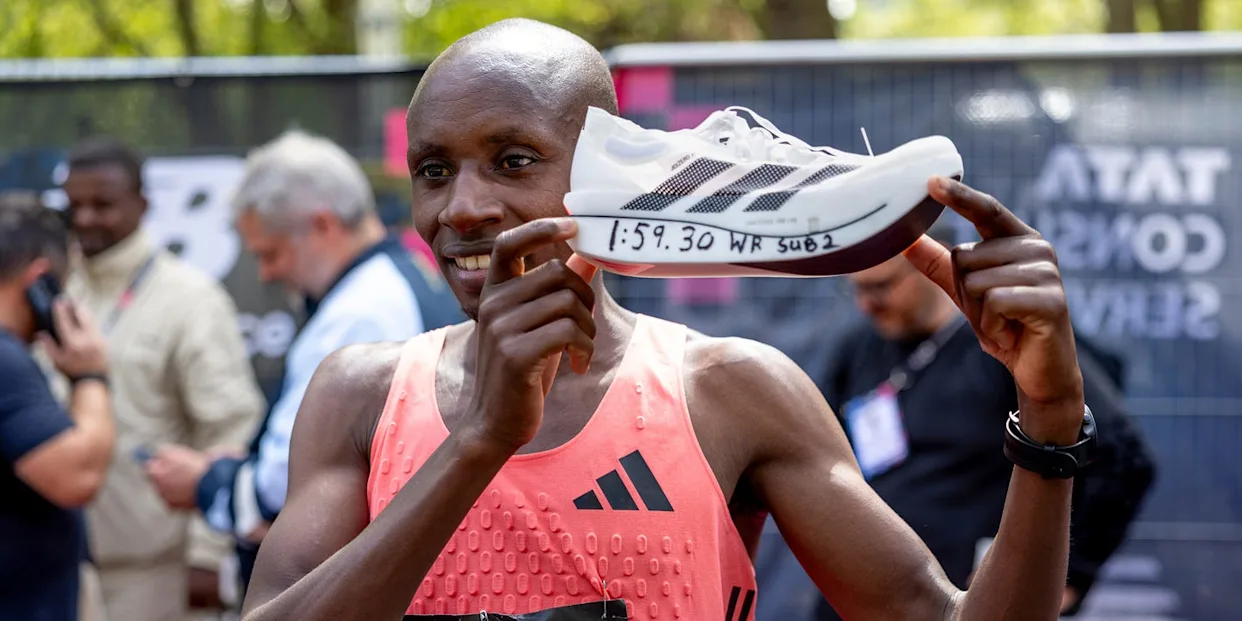
Sabastian Sawe crossing the finish line (https://uk.style.yahoo.com)
Independent biomechanical research commonly supports that shoes with the combination of specialised foams and carbon plates can improve running economy by 2.5 – 3.5% (Joubert & Jones, 2022; Senefeld et al., 2021). As seemingly implausible as it may sound, by replacing your traditional shoes you could potentially shave minutes off your marathon time without the need for additional training. This is fulfilled through the super shoes propulsive design that results in athletes using less oxygen to run at a given pace. Subsequently making each stride more efficient.
The immediate question is then, if each athlete is wearing them doesn’t that nullify the benefits by evening the playing field?
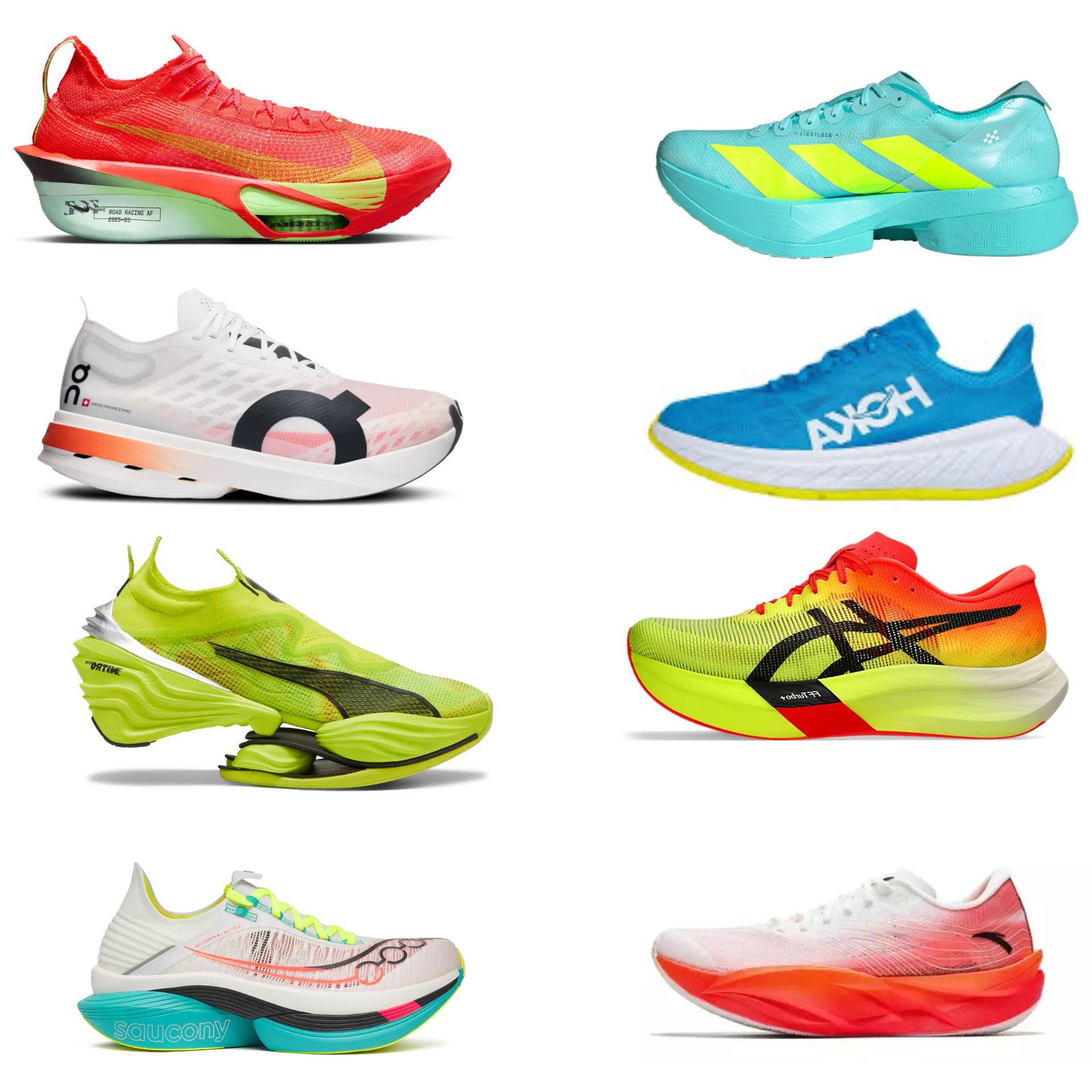
Image of some of the recent super shoes on the market
In short, the answer is no. The measurable performance gains are highly individualised. The advantage not only depends on the materials used and the geometry of the shoe, but also on the unique relationship with the athlete’s running biomechanics. To maximise the performance benefit of a shoe, certain models are optimised for particular gait types and running speed ranges. It is for this reason that not all athletes who wear the same shoe will get the same running economy benefit. Before we get carried away, let’s take a step back and explore how the mechanics behind these shoes maximise energy return.
The Engineering Behind The Shoe
There is the widely spread misconception that the carbon plate is the single factor responsible for propelling runners forward. Nor is the sole driver the thick foam midsole. Rather it is the synergy of the two working together where the engineering marvel happens.
In summary, the shoes’ thick, soft foam midsole stores the energy from each step and the stiff carbon plate acts as a lever to dictate how and when the energy stored by the foam is released to maximise forward motion. It is this phenomenon which results in the improvements in the running economy.
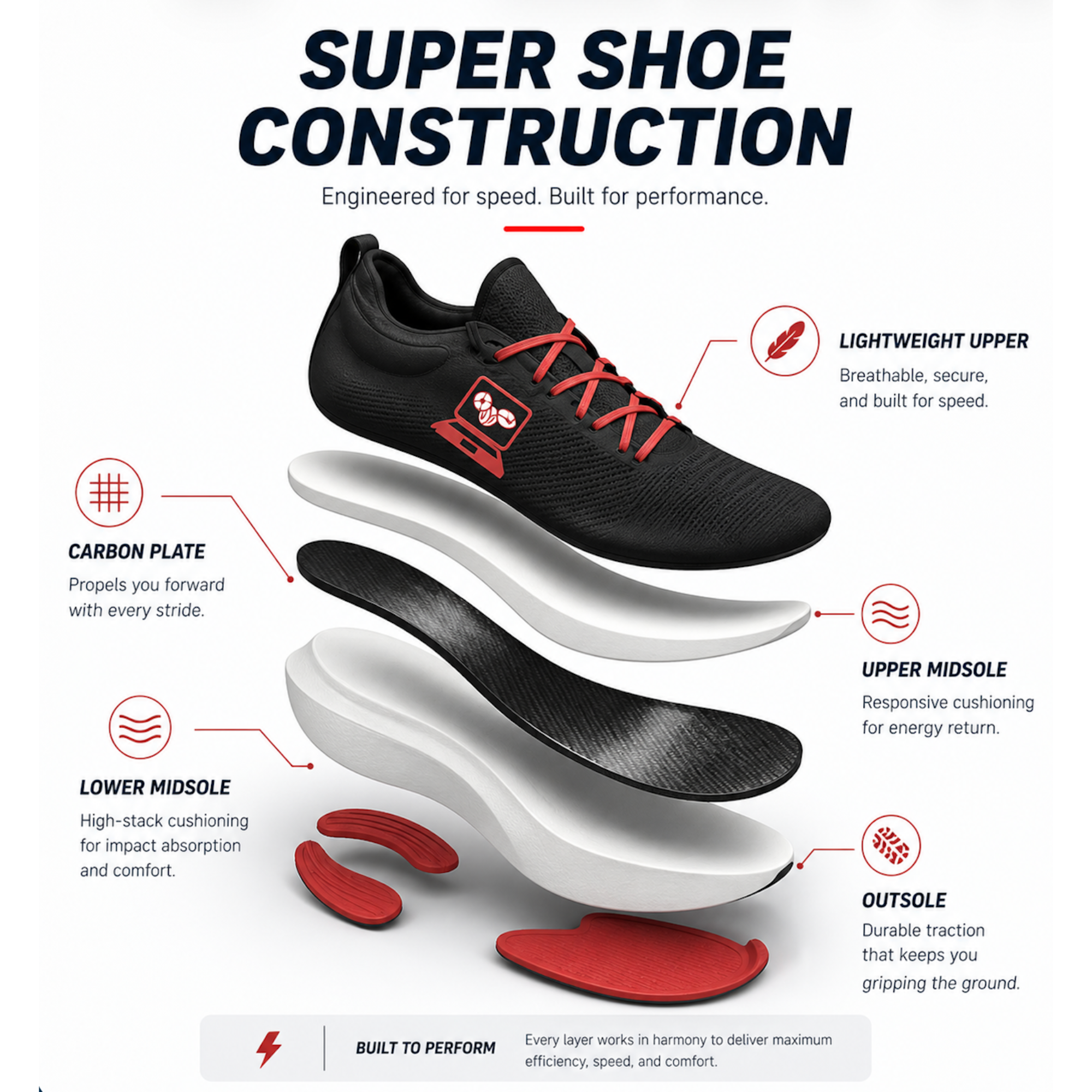
Expanded view of a carbon-plated super shoe
When developing a midsole to maximise running economy, manufacturers need to take a dual approach. They need to select foams with high energy return as well as meticulously shape the geometry of the midsole to utilise the athlete’s natural gait for forward propulsion.
Foam Material
With the goal of the midsole being peak performance, the material science of the super foams is constantly evolving. At the current moment in time, the materials of choice for most manufacturers of elite running shoes are advanced elastomers such as PEBA (Polyether block amide) or some form of thermoplastic elastomer such as A-TPU . What makes these revolutionary foams sought after is their superior lightness whilst facilitating high energy return.
To dictate the behaviour of a shoe, manufacturers modify the composition of these foams into their proprietary blends to fine-tune specific performance characteristics such as responsiveness, durability and firmness. Regardless of the unique material makeup, most manufacturers share the universal design choice of opting for shoes built with the maximal stack height.
Stack Height
By selecting a thick stack of foam it increases the shoes compression distance which directly improves the kinetic potential for energy return. Much like a tall spring compared to a shorter one. However, it is the increased stack height in conjunction with the foam’s rapid compression and recoil that occurs with each step that reduces the shoes stability. This in turn results in a wobbly and less controlled ride in particular with lateral movements and sharp turns. It is for this reason runners perceive carbon-plated super shoes to feel less stable than a traditional trainer. Paradoxically, it is that desired bouncy effect which enhances energy return that inherently compromises the shoes stability. Nonetheless, for a shoe to be a viable option for runners it needs to both translate the energy return from the foam into forward motion whilst simultaneously maintaining sufficient stability for navigating the terrain of a marathon.
Rocker Effect
In order to address the trade-off between stability and energy return, the current design trend by manufacturers is to implement a “rocker effect”. This ensures the foot rolls quickly and directly forward, propelling the athlete during the push-off phase of the gait cycle. The controlled transition is achieved by manipulating the shape of the midsole through the use of exaggerated curves that raise the heel and pronounce the upward curve of the forefoot which is then embedded with a rigid carbon plate in between the foam. The stiffness of the carbon plate ensures that the shoe maintains its aggressive rocker shape during impact, while allowing the plate to act as a lever that translates the vertical forces from the runner into horizontal propulsion.
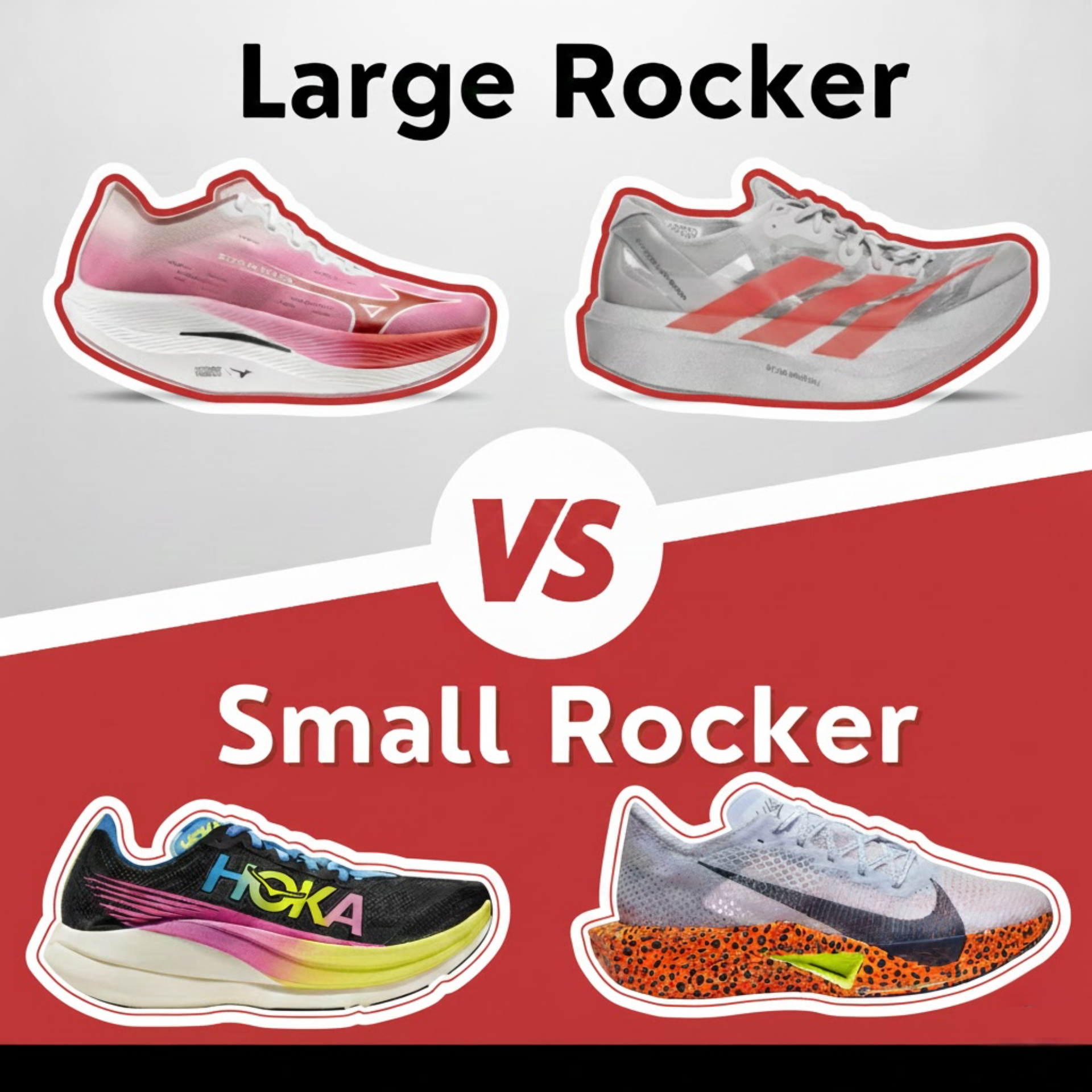
Comparison of shoes with different rocker geometries
Carbon Plate Configuration
In order to dictate the magnitude of the rocker effect, the carbon plate is thoughtfully manipulated through its length, shape and positioning. By adjusting the length of the carbon plate, manufacturers can control the stiffness of a shoe. Full-length plated carbon shoes allow for greater stiffness throughout the gait cycle while acting as an aggressive lever. This is the most common design with marathon shoes. Whereas using a shorter, ¾ plate from the midfoot to toe enables a shoe to have greater flexibility. When it comes to the curve of the plate, a more spoon-shaped curve provides a more aggressive and dramatic rollover, whereas flatter plates provide a more stable and less pronounced rocker effect. Regarding positioning, placing a plate closer to the outsole of the shoe provides for a more stable and firm ride in comparison to placing it closer to the foot, which creates a more bouncy and aggressive feel. It is through these configurations that manufacturers create their shoes with desired performance outcomes. As cutting-edge as the engineering involved in developing these shoes, stiff carbon plates were first introduced almost 30 years ago by a well-known Italian sporting manufacturer.
Product Journey
Decades before the current super shoe era, the 100th Boston Marathon served as a foreshadowing moment. The winner, Moses Tanui, crossed the finish line with an unreleased pair of Fila’s experimental carbon-kevlar-plated shoes. Although not a commercially available product at the time, they served as the prototype for Fila Silva Racer. A shoe that was officially released to the public a year later in 1997. Similar to many modern super shoes, they featured a full-length carbon plate for stiffness. This came from the same composite supplier as the Ferrari Formula One Team.
Internal lab results of the Fila Silva Racer demonstrated an impressive 2.4% improvement in running economy when tested on a modified treadmill. This is despite using an inferior foam midsole compared to modern shoes. The Fila shoes utilised a standard EVA foam in the midsole, which lacks the energy return benefits of today’s ultra-lightweight and responsive PEBA and TPU-based foams.
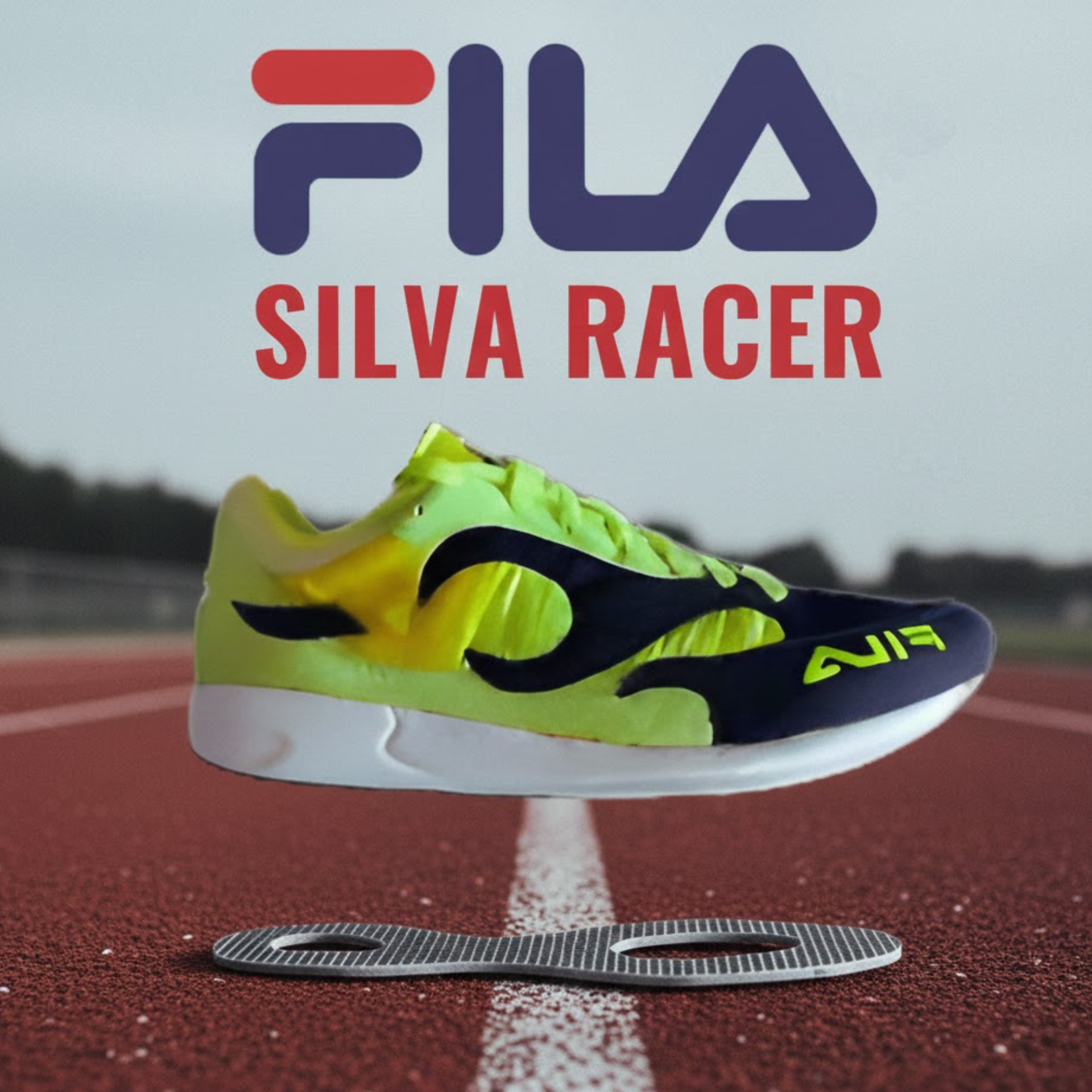
A carbon-plated shoe from the 90s
Unfortunately, despite achieving significant performance milestones, including a half-marathon world record in 1998, the shoes and Fila as an overall business ultimately failed to find commercial success. This led to Fila shifting their focus away from elite running. Although other companies such as Reebok attempted to produce carbon-plated shoes after Fila’s attempts, their efforts didn’t yield wide commercial adoption. It wasn’t until Nike capitalised on the opportunity of the technology by secretly collaborating with elite athletes that the modern era of the carbon-plated shoes was truly ignited.
Nike’s Giant Leap
It was beyond a coincidence that all three podium winners at the 2016 Olympic men’s marathon did so wearing Nike’s highly secretive carbon-plated prototypes. The design of these shoes broke away from the popular minimalist trend at the time by marking a new design philosophy of maximising energy return through a bulky yet lightweight foam structure with a full-length carbon plate. These innovative prototypes provided a crucial technological stepping stone for Marathon legend Kipchoge’s initial attempt at breaking the once-perceived impossible sub-2-hour marathon via the Nike-funded Breaking2 project.

2016 Olympic Men’s Marathon Podium (https://www.si.com)
While preparing for the event in Monza Italy, every aspect of human performance was rigorously analysed and implemented by the multi-disciplinary performance team supporting him and the other 2 athletes (Tadese and Desisa). The footwear worn to enable maximal running economy was a critical part. Although Kipchoge didn’t break the sub-2-hour marathon with that attempt, he got incredibly close by an unofficial 26 seconds.
Nonetheless, the event was instrumental for Nike, using the hype as a marketing strategy for the launch of their first commercially available carbon-plated super shoe, the vaporfly 4%. The “4%” in the name refers to Nike’s claim on its improvement in running economy when compared to its previous fastest running shoe, the Nike Zoom Streak 6. Nike initially did a limited release creating a must-have status with stock selling out rapidly. Overall, the launch was both a commercial success and a revolutionary moment in product innovation as it disrupted the running shoe market.
Nike’s first-to-market advantage and aggressive IP strategy allowed them to dominate the podium results at the Major Marathons during the 2018-2019 period, with the majority of athletes wearing their shoes. It was during this period that an unprecedented number of world records across distances were broken. In response, the World Athletics (WA) organisation placed restrictions to ensure fair competition via limiting shoe stack height, carbon plate configuration and requirements around shoe availability.
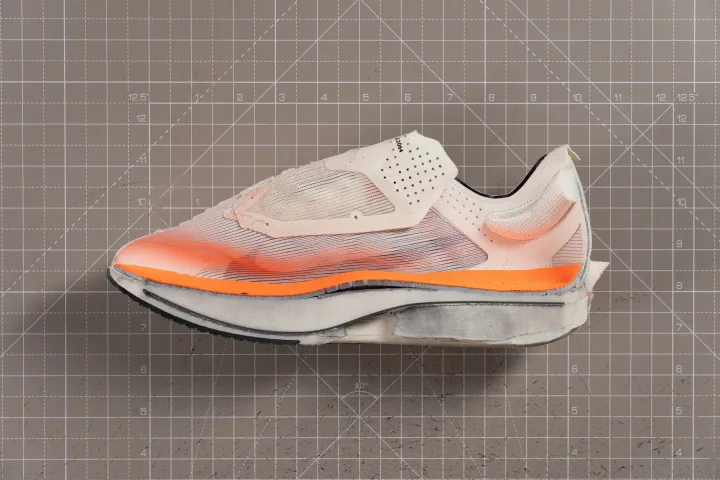
Nike VaporFly 4 dissected (https://runrepeat.com)
In playing catch up, not only did other brands have the technological challenge of developing a shoe that rivaled Nike’s performance, they had to do so while navigating a complex landscape of existing patents and World Athletics restrictions.
Current State of innovation
Working within these boundaries current innovation in performance focuses on carbon plate structures, reducing shoe weight, refined midsole geometry and more responsive foam materials. It took adidas 3 years after Nike’s initial commercial launch to release their competing carbon-plated super shoes. A short period later they succeeded it with the superior Adizero Adios pro. Amongst the most notable features of this shoe was their diversion from the traditional single carbon plate by using a system of 5 carbon-infused rods embedded within the midsole to mimic the structure of the metatarsal bones. Although their purpose is similar to a traditional carbon plate their function of operation is different by acting as an exoskeleton to the metatarsals which supports the movement of the foot during the gait cycle. Since then they have employed numerous strategies to further improve the performance of their shoes with their latest pair of shoes featuring a carbon-rim.
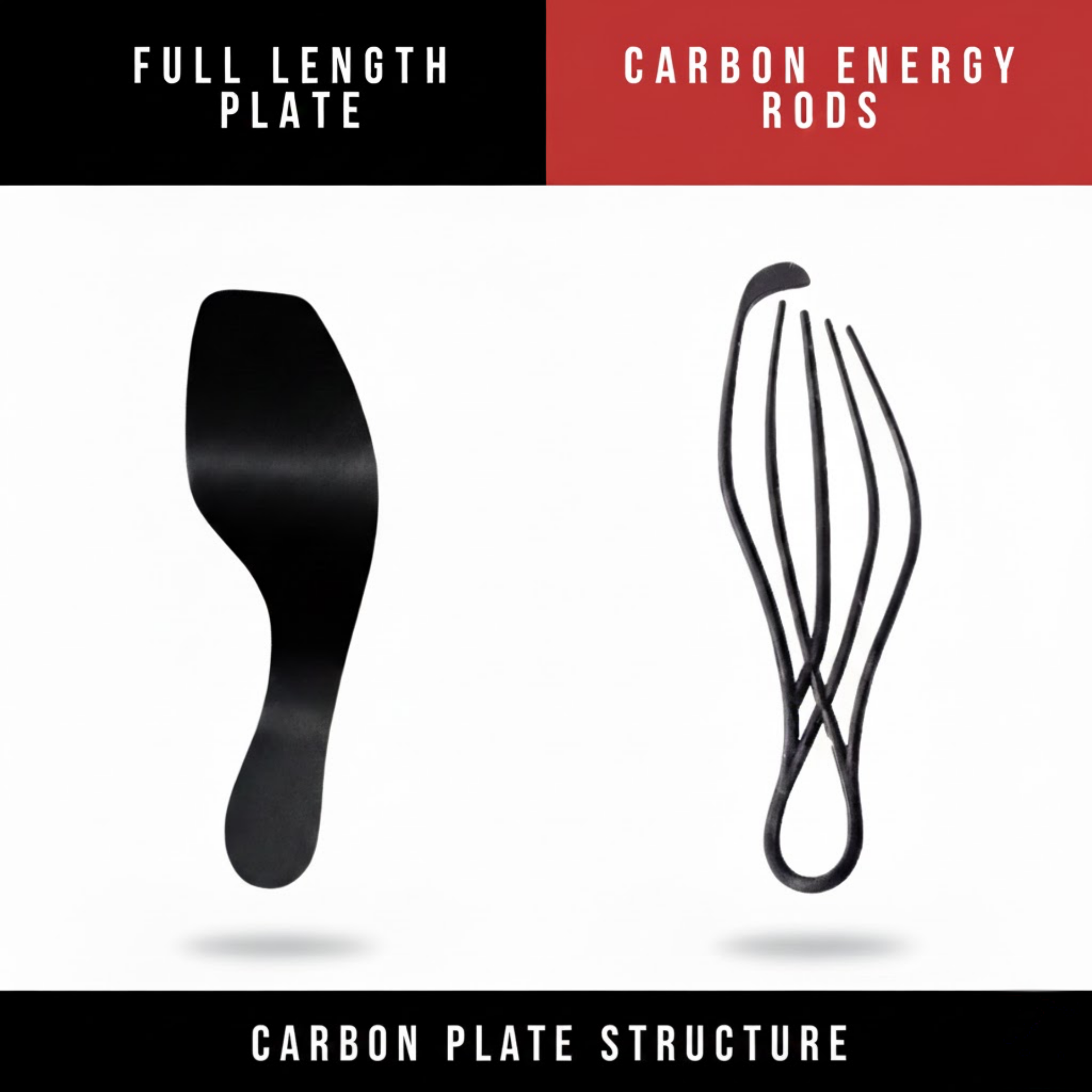
Comparison of a traditional carbon-plate to carbon rods
With their current most premium elite shoe the Adizero Adios Pro Evo 3, Adidas have focused on creating the lightest and most performant shoe possible. The shoes weigh under 100 grams or 25-40% lighter than other carbon-plated shoes on the market and feature sa carbon-rim surrounding the shoe. It is with this shoe that both Sabastian Sawe and Yomif Kejelcha broke the sub-2-hour marathon at the 2026 London Marathon. It is important to note that in making a shoe this light comes at the expense of durability in where it is optimised to be most performant during the first race wearing them.

The Adidas Pro Evo 3 shoe worn by both sub-2-hour marathoners (https://www.complex.com)
Another notable innovative pair of super shoes are the Puma Fast-R Nitro Elite 3 which individual lab results have found to improve running economy by 3.15% or what they claim to be 4 minutes and 30 seconds for a 3 hour marathon runner. The shoes use a combination of techniques to improve performance including a decoupled midsole design, an extended carbon plate and a nitrogen infused foam which can be categorised as a-TPU midsole. The material makeup of A-TPU midsoles have been shown to provide better energy return than traditional PEBA based foam with more manufacturers implementing their own proprietary blends. An example of which is Asics’s with the FF LEAP midsoles which they claim provides a more bouncy ride. Such attention to detail, and drive by manufacturers to further improve the performance of shoes is displaying no sign of slowing down.
Another revolutionary moment in elite running shoe innovation has been the LightSpray technology produced by ON in their pursuit for a more performant, light weight and sustainable shoe. The ON cloudboom strike LightSpray features 1.5km of material sprayed by a robotic arm into a single piece light weight upper with no laces. This creates a “barely-there” feel and weighs only 170grams in a men’s size 9. These shoes have also seen success on the roads with two of the female major marathon winners in 2025 wearing these.
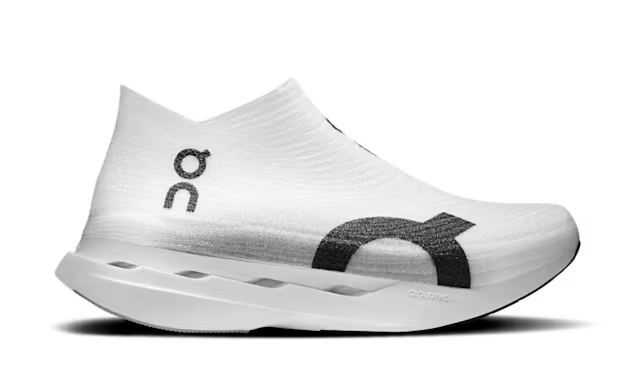
On super shoe made with LightSpray Technology https://www.on.com
Although purely personalised shoes are not allowed under WA regulations Asics has given athletes 2 distinct running experiences to choose from with their elite running shoes. The first of which is the Metaspeed Sky which is targeted towards runners who want to emphasise more on longer strides. They aim to achieve this by adjusting the position of the carbon plate to higher up in the midsole and closer to the foot while also making it flatter. This gives the runner a more bouncier and propulsive feel. The other alternative is the Metaspeed Edge which targets high cadence runners. They do this via having a more curved carbon plate positioned lower in the midsole which creates more of a rocker experience than the vertical bounce in the Metaspeed Sky. Although not truly a personalised pair of shoes, by giving athletes the choice of 2 shoes with distinct performance characteristics, it enables them to pick a pair of shoes to match their running style. This might trigger a trend in the future where consumers can choose shoes which better match their individual biomechanics.
Whether it’s further upgrades in carbon plate configuration, enhancement in energy return of foam midsoles or refinements in shoe geometry, athletes and manufacturers will work side by side to continue to push the limits of human performance through technological advancements.

