


Cycling is a multi-functional activity. It takes a person from point A to point B, whether it’s for commuting or delivery. It’s a fun way to leisurely explore a new environment at a comfortable pace (think bike tours). It’s also a great form of exercise and training, and you could do it by yourself or in a pack. Depending on the type of bike you ride, you could do it on the road, dirt or trail. That said, you can ride your road bike on dirt or gravel with the right setup and tweak your riding technique/style while at it.
Over the last 10-15 years, there have probably been three areas (in my opinion) of innovation that have seen lots of growth in the bike industry: 1) electric bikes (e-bikes), 2) sensors for measuring bike/cyclist performance, 3) custom bike frames and materials (think carbon fibre & titanium). There is a lot we can cover on those topics, but instead, we want to switch gears and spotlight three game-changing innovations that focus on cyclist safety and ergonomics.
1. Project Flock – Be Seen As Human
Bike lights
Bicycle lights. They show the way for cyclists at night and increase awareness of the cyclist’s presence on the road. Either way, they are meant to keep the cyclist and others around the cyclist safe. Over the years, there have been a few significant changes and innovations that changed how bike lights operated or were used. These include the introduction of electricity, light bulbs, LEDs, lasers, hub generators, batteries, etc. There’s a lot more in this article “A brief history of bicycle lighting technology“. But are those developments alone enough to keep cyclists safe?

Where regulations and research come into play
In 1968, the Vienna Convention on Road Traffic mandated that vehicles, including bicycles, have red rear lights as a safety standard. They (rear lights) were still steady (non-flashing) until the 1970s – 1980s* (estimate) when flashing rear red lights were made by Ed Kearney. It was later in the 1990s that (red) LEDs became practical enough to be used for producing rear flashing lights. Even then, the safety of using rear red flashing lights was still being debated, and some places still don’t allow it (e.g. Germany, Netherlands and Austria). In the UK, flashing bike lights only became legal in 2005. A 2017 study by Darlene Edewaard compared steady and flashing rear lights and found that a cyclist with a flashing light could be detected much sooner on a straight road. To put that in numbers, it’s an average of 82 metres sooner, which is pretty significant.
[*note: a study published in 1980 comparing 3 different rear warning devices (red light, red reflector and amber pedal reflectors) found that the red light was most effective in increasing visibility of cyclists at night]
That same study by Edewaard showed that night-time conspicuity (or being able to get attention) was maximal when lights were placed on the heels while pedalling. Another PhD study that was published in 2018 further echoes this, highlighting that the biological motion of a pedalling rider’s legs can enhance conspicuity.
Productising the research outcomes
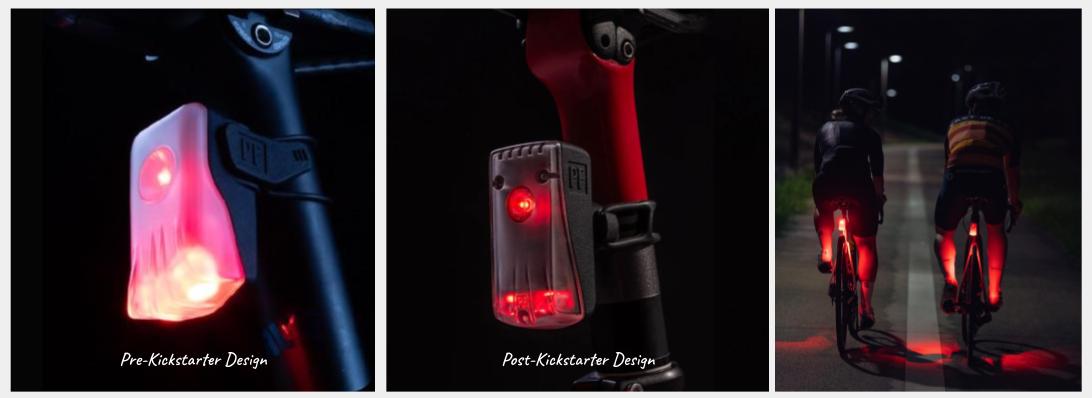
Tim Ottaway, co-founder of Project Flock, took these study outcomes and the idea of showing pedalling motion, and translated them into the design and development of Flock Light – the first biomotion rear lights for cyclists. By shining an additional set of lights down on the cyclist’s legs, the cycling motion is brought to the attention of surrounding people. More importantly, drivers become aware much sooner that a cyclist is ahead of them. Instead of just looking at a bunch of red lights in front of them and having to process in their minds which red light is which.

What started as Tim’s Industrial Design honours project very quickly showed potential to become a consumer product that could improve the safety of thousands of cylists. With the support of RMIT’s pre-accelerator program, Tim further developed the product and a business case to market and produce it. The product won numerous design awards along the way, including the James Dyson national award, the Core77 Design Awards, the London Design Awards, and the Australian Good Design Award.
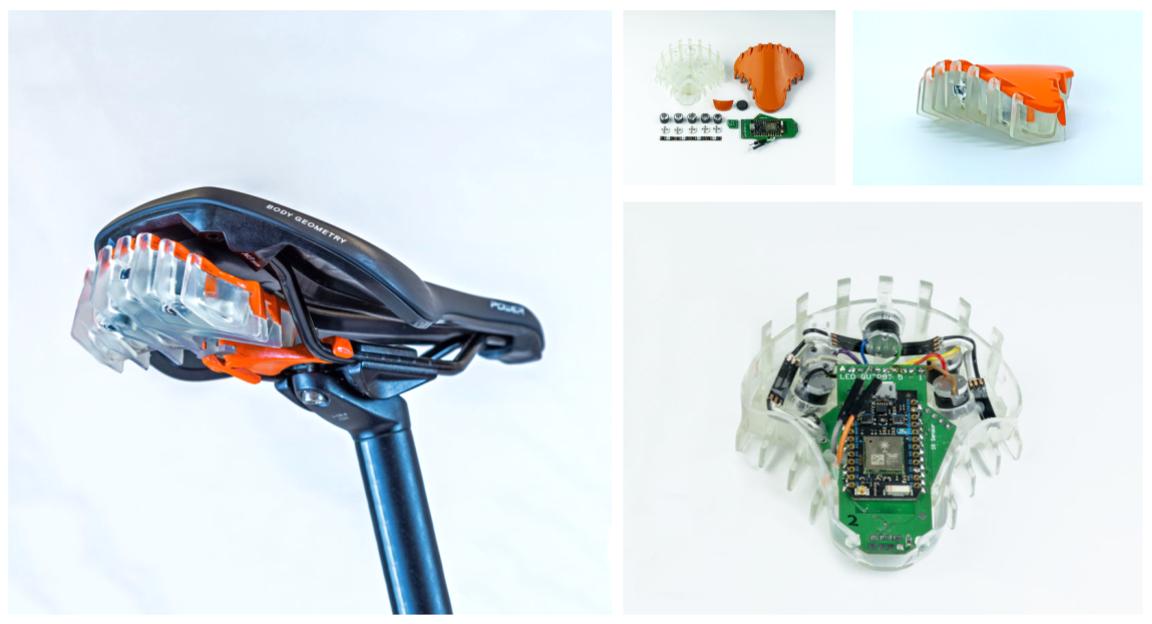
But it was through a 2022 Kickstarter campaign that the Flock Light was officially launched. The team updated the design prior to the campaign (and after) to improve usability and manufacturability. Besides the full Biomotion lighting mode, there are other modes such as Group ride mode, Daytime mode, and Eco mode, which give users much longer run times. There is an LED indicator that shows how much juice is left and when it needs to be charged. Their seat post mount design fits most seat post types, from Round to Aero and D-shape, and, on top of that, the Flock light has a Twist clip for easy attachment and detachment from the mount.
Moving into 2026, the founders have brought on a new executive team member who worked closely with them to develop a dynamic new growth strategy. This would ensure that the team continue to deliver innovative products while putting cycling advocacy at the very heart of what they do. They are deepening their commitment to community, bikes and inspiring more people to ride, everywhere. With these ambitious plans and goals, they are opening expressions of interest for investors and partners who share the same passion for better cities and a more sustainable cycling future. They have even hinted at developing their next product. If you would like to be part of the next stage of Flock’s journey, drop them a note on their contact page (link) or check out their LinkedIn post (link).
2. vabsRider – revolutionising cycling comfort
The bicycle seat, or saddle, was essentially an extension of the horse saddle when it was first made. It supports most of the rider’s weight, but not all of it, because some (of the weight) is borne by the handlebars and pedals. The typical seat/saddle components consist of a seat shell, a cover, and rails that connect to the saddle clamp and the seatpost. Most innovations in bicycle saddle design and development have focused on materials, construction, adjustability, and comfort. They all affect one another in some way, and here we are just going to zoom in on comfort. A comfortable seat (compared to a less comfortable one) means we will feel less sore, ride longer, ride faster, and possibly ride more often.

The Comfort Progress
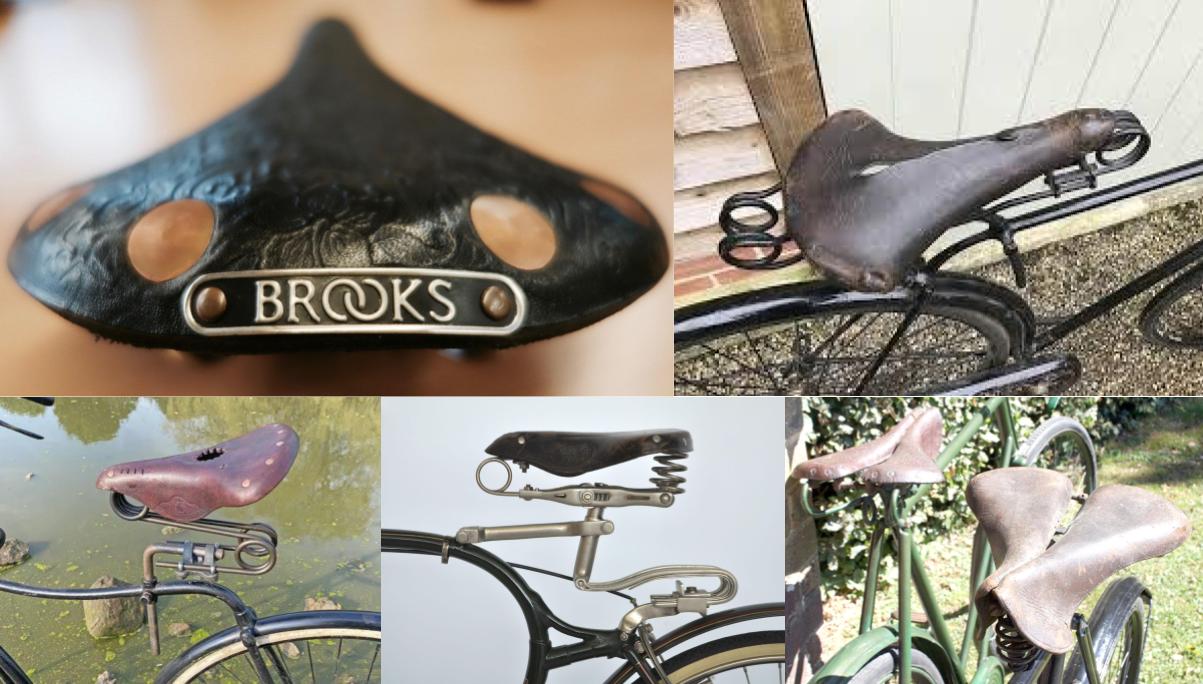
In the 1880s, tensioned leather (such as the classic Brooks design, which was patented at that time) was introduced, and that gradually broke in and moulded to the rider’s anatomy. Springs were added under the seat to absorb road shock. Then seats were designed wider, which made cycling more accessible to women. Towards the mid-1900s, competitive cycling gained popularity and gave rise to two design paths: comfort-oriented touring saddles and minimalist racing saddles. The racing saddles were designed to be narrow and firm because, firstly, they allowed for greater leg movement during high-cadence pedalling and, secondly, firmer saddles transferred power more efficiently with less energy absorption. Comfort was basically thrown out the window when it came to performance.
Impact of Research
Going into the 1990s, research revealed that narrow saddles were adversely affecting male cyclists. That led to a huge shift in saddle design. Mainly, a middle cutout or channel was designed to relieve pressure on the perineum. Later on, it was discovered that women cyclists would also benefit from that pressure relief. However, the support needed differs between men and women because their pelvic structures and soft-tissue pressure points differ. That’s where pressure mapping technology plays a huge part in understanding and highlighting the different needs. In fact, some companies offer custom fitting services that include data-driven saddle fitting.
Radical Changes

Noseless bi-saddles were first introduced by Hobson Seats in 1983. A number of other bike saddle companies have since come up with their own versions. Apparently, police on bikes were the early adopters of noseless bi-saddles because they are patrolling on their bikes for around 8 hours during their shift. The noseless saddles significantly reduced the pressure in the groin area, as shown in a study.
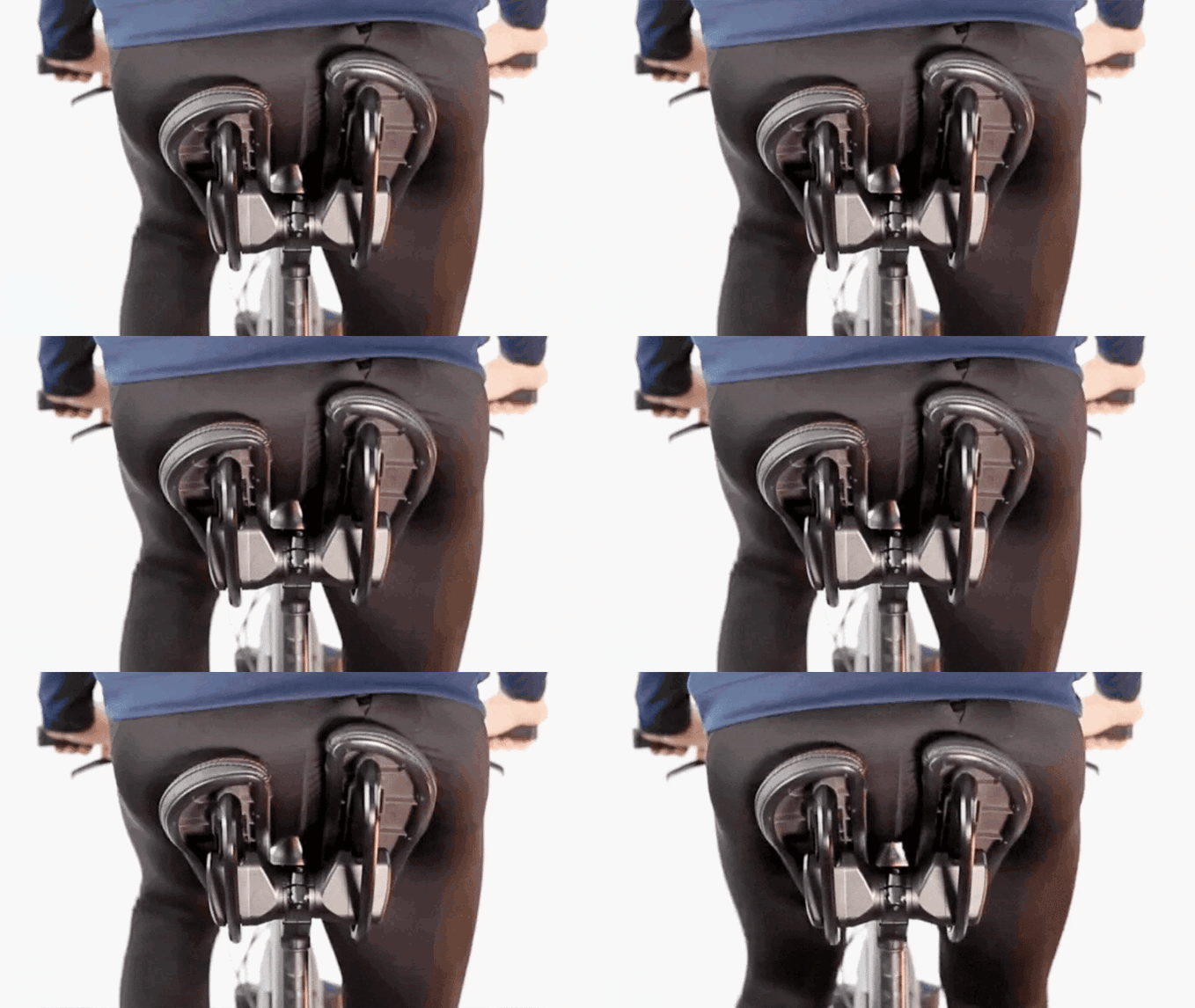
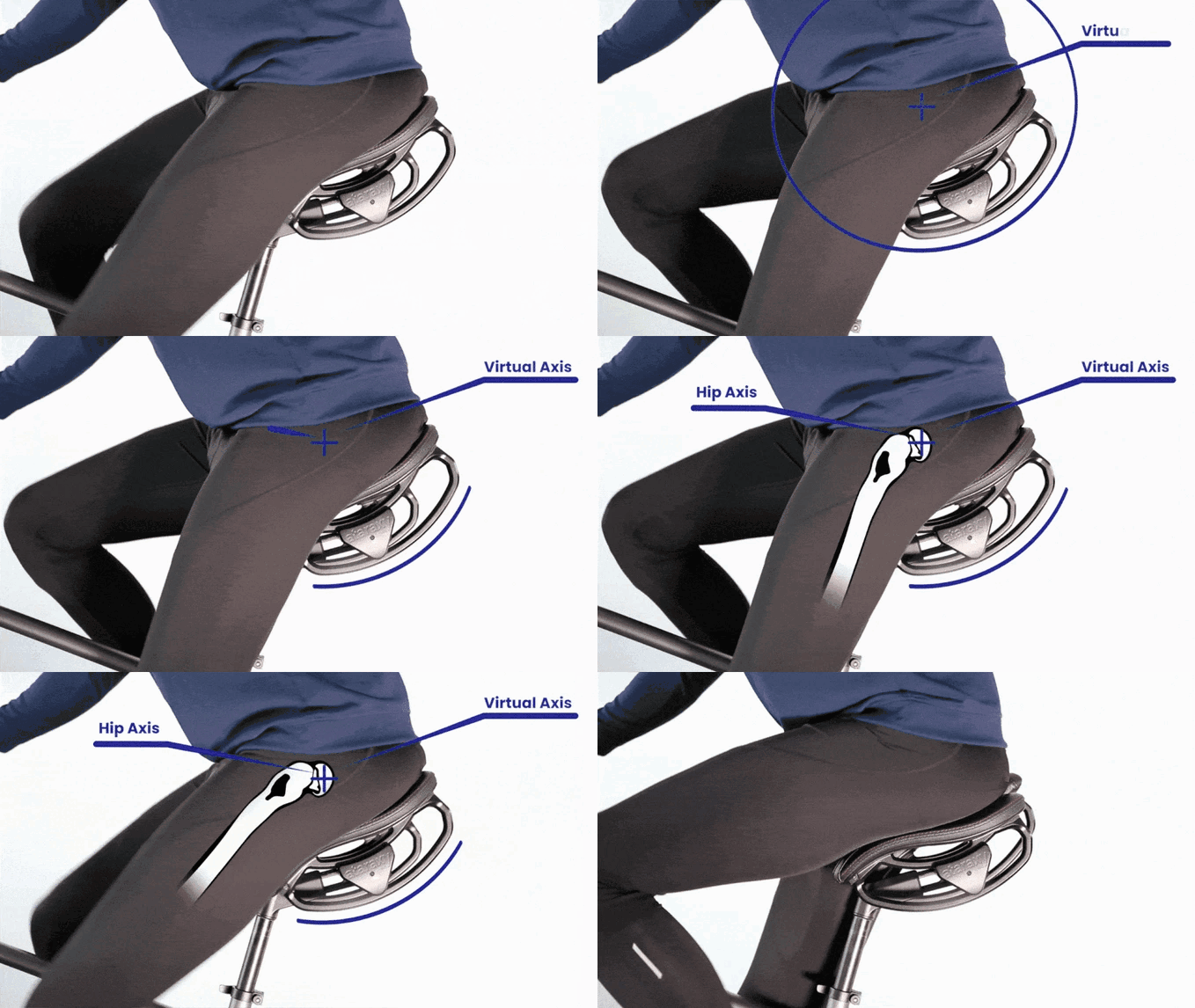
On the other side of the world (in Australia), Robin Macan (founder of ataraxyBSC) was also pursuing a more comfortable seat design. He started experimenting and prototyping in 2016. Then, after 8 years of development, with the assistance of two design consultancies, vabsRider was born. Instead of static bi-saddles, vabsRider is made up of two separate saddles that move/glide in correspondence with the movement of the cyclist’s left and right butt cheeks (and legs). Also known as the Virtual Axis Bike Seat, their patent-pending split-seat design supports the cyclist’s femurs (or thigh bones), moving on a virtual axis aligned with their hips. It shifts pressure away from one’s sit bones and perineum, distributing it evenly across the thigh bones.
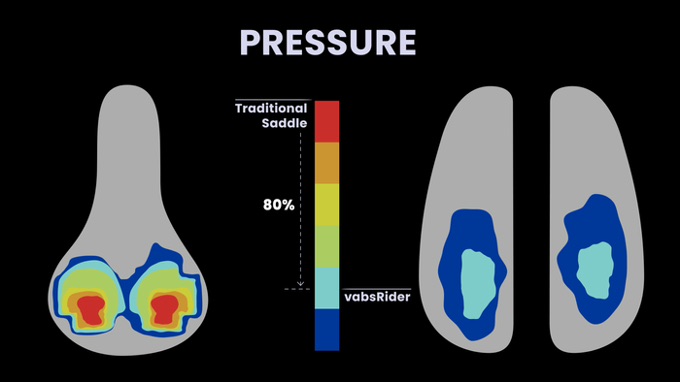
With the help of an accredited exercise scientist and certified bike fitting expert, ataraxyBSC conducted their own study comparing a traditional saddle and the vabsRider. Pressure sensors were used to map the pressure applied on both saddles when a cyclist pedalled on a stationary setup. The results showed that the vabsRider effectively reduced pressure by up to 80% compared to the traditional saddle. Besides that, with essentially nothing in the middle, it eliminates lateral rubbing and friction that can cause chafing and saddle sores.
Kickstarter and beyond

They had a pretty successful Kickstarter campaign in mid-2025, and they have been busy working out production of their units. There are no (Australian or International) standards that actually fit into this type of bicycle saddle. So they actually developed their own fatigue testing protocol to ensure the vabsRider is durable and safe for riders. Check out their instagram post about it. They also had some manufacturing challenges, which means delay for the initial backers and they are pretty transparent about it on their Kickstarter page. But that means for those who are only just finding out about the vabsRider now (July 2026), there is still the opportunity to pre-order a unit (or more) on their Backerkit site. There are 3 different options for seat post diameters (27.2mm / 30.9mm / 31.6mm), the width of the seats can be adjusted from 50-70mm, and there’s plenty more details about the product on their website; and even information about becoming a distributor.
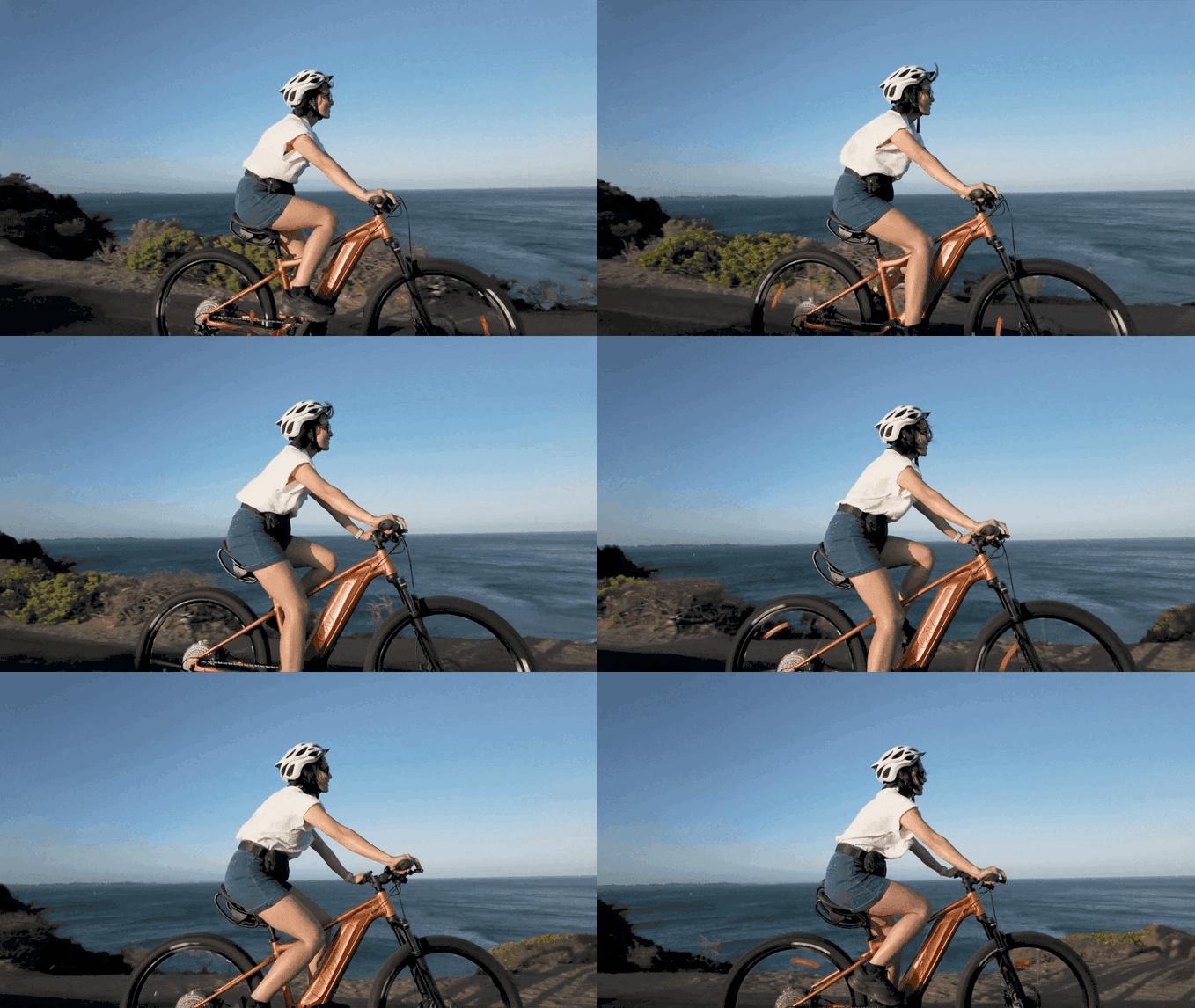
Lastly, you know this is a game-changing product when it has won multiple design awards (Good Design Awards, Victoria Premier Design Awards), been featured in many media outlets (e.g., Core77), and has a shout-out from Australian Olympic Track Cycling Gold medalist Anna Meares. And in case you (like me) wondered about the company name, ‘ataraxy’, it means – a state of serene calmness and freedom from anxiety. Yup, that’s the feeling you should have when riding on a vabsRider, unless, perhaps, you are late for an appointment.
Minimis wants to help you stay focused
Data, data and more data.
Data. One thing that modern electronics, sensors, and the internet have given us (way too much of) is data. Cyclists are not exempt from that. The basic or most common smartphone app that cyclists use might be Strava, and we can track speed, distance, location, elevation, etc. Then we can add other sensors/devices like your power meter, speed/cadence sensor, heart rate monitor or smartwatch, plus bike computer and/or smartphone. For those chasing the 1% improvement, they might add aero sensors or muscle (EMG) sensors (typically built into shorts) to help them understand how their riding posture and effort affect their performance.

How do you see that data/stats?
Regardless of how many sensors or tracking devices you have on your bike, one common thing in every setup is a display. One that will show you your current stats – be it time, speed, heart rate, effort or the next nearest coffee shop. That could be your watch, bike computer or your smartphone. Unless you have the superpower of split vision – having each eye look in a different direction- you will have to take your eyes off the road to check your stats on that display. That split second or two when we look away could end very poorly.
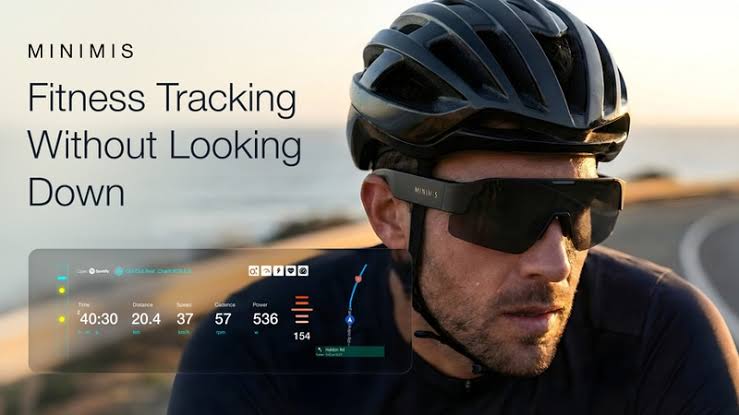
Joseph Guo, co-founder of Minimis, almost had a similar crash in that video above when he looked down to navigate while cycling. He became aware that, sadly, this is a common occurrence amongst cyclists. He was also frustrated by the fact that he had to carry multiple devices on his ride. This led him to start minimis in 2022 and build minimis Flow AR – the first standalone Heads-up display (HUD) sunglasses that measure heart rate, have an eSIM for calls, GPS for navigation, connect to ANT+ devices and display stats in an augmented way. This means a cyclist can go for a ride without carrying multiple devices, and keep looking ahead, focusing on their ride, instead of checking stats on their handlebar or wrist.
Kickstarter launch and challenges
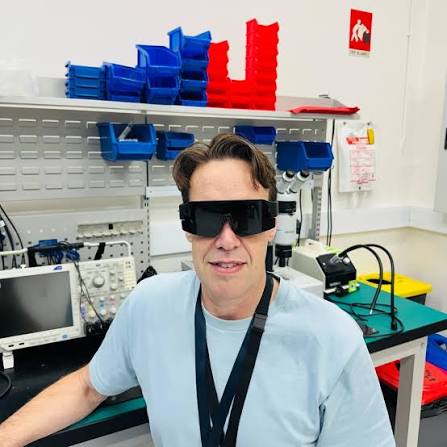
Minimis launched a Kickstarter campaign in 2023 and was successfully funded within a day. This is pretty strong evidence that their message of being less distracted while riding had struck a chord with many. With a bold vision like this, it was also really important that the minimis team got the tech and user interface right. Putting so much tech into eyewear is no easy feat. The (very lean) minimis team has been going heads down, bums up, developing the hardware and firmware since then. They are at this point (Aug 2026) testing their 6th functional prototype and still refining and making sure their glasses deliver what they promised- distraction-free riding. Some of those challenges include making stronger parts, managing features and weight, and making the display feel ‘ambient’ enough.
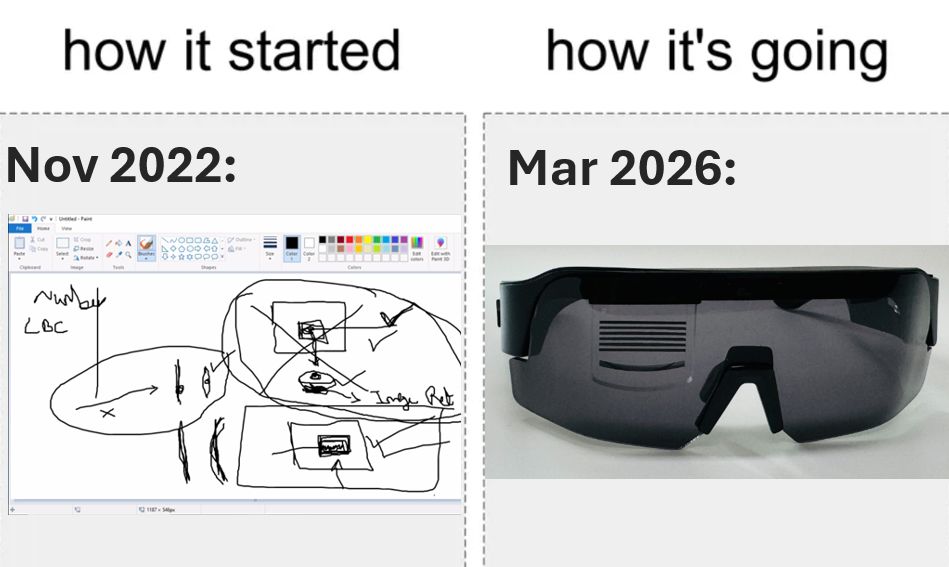
At the same time, the minimis team had to spend a fair amount of time raising money around the world to keep developing and validating. One really cool side project they worked on (the Minimis phone app) that eventuated from a ‘shower thought‘ inadvertently became really successful and an additional source of funding that supported the Minimis Flow development. What’s amazing is that the app is based on the same principle of minimising distractions – turn the interface into black and white, block out distracting apps, and allow you to stay on task.

Side note: Meta started working on their smart glasses in 2020 with Ray-Ban and launched the first-gen version "Ray-Ban Stories" in 2021. Then it was only in 2025 that they released the Ray-Ban Display that has a full color built-in display in the right lens. Bearing in mind they had worked on the Occulus and AR years before that. Clearly, developing smart AR glasses is a huge endeavour even for a tech giant like Meta.
What’s next?
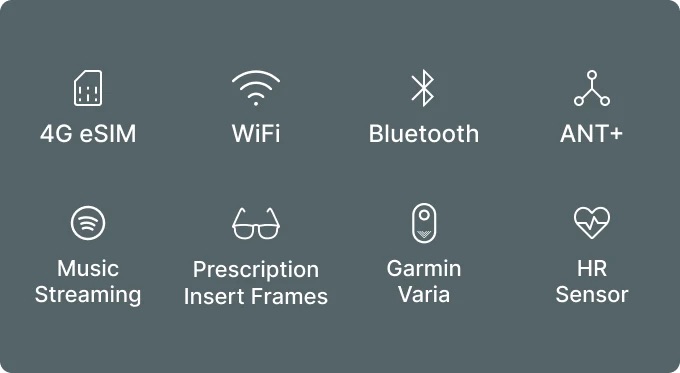
Their goal is to release a beta version to early backers by the end of 2026, then gather user feedback and validation to make sure the product is actually useful before scaling up and mass producing it. Some might think that they might lose out to other players in the market (e.g. Meta, Vuzix) who already have smart glasses for sports released in the market. But the truth is, none of them are actually standalone (works without a smartphone), have ANT+ connection (for lots of bike sensors), or a built-in optical heart rate sensor. It’s a bit ironic, given minimis is Latin and alludes to minimal, yet the minimis is packed with features. But I guess the actual point is that with the minimis Flow AR, you can minimise what you carry and, more importantly, stay focused. Follow them on LinkedIn to see their journey or check out their podcast interview with the Australian Sports Technology Network. They are also open to conversations with investors and people who want to back them. If that’s you, you can find out more on their Wefunder page.
That’s it from us. Thanks for reading! Feel free to leave a comment below or message us here if you would like to chat about a sports tech idea or project you are working on.

